Securing your home has never been more critical, and outdoor cameras stand as your first line of defense against potential threats. Are you looking to safeguard your property, monitor activity, or simply gain peace of mind whether you’re home or away? As a technician with over a decade of experience in surveillance technology, especially outdoor cameras, I’ve seen how quickly these devices evolve, offering everything from crystal-clear night vision to advanced AI detection. This comprehensive guide will navigate you through the world of outdoor cameras, helping you understand the various types, essential features, and top recommendations to make an informed decision for your home or business.
Outdoor Cameras: Essential Security Solutions
Outdoor cameras are indispensable tools in modern home and business security, acting as vigilant eyes that deter crime and provide crucial evidence when incidents occur. Beyond mere recording, they offer a proactive approach to safety, allowing you to monitor your property remotely and respond swiftly to any unusual activity. The presence of a visible outdoor camera alone can significantly reduce the likelihood of burglaries or trespass, making them a fundamental component of any robust security strategy.
Common Types of Outdoor Cameras
The market offers a diverse range of outdoor cameras, each designed with specific functionalities to meet varying security needs. Understanding these types is the first step toward finding your ideal surveillance solution.
Based on Technology:
- Analog Cameras: These traditional cameras transmit video signals over coaxial cables. While generally more affordable, they offer lower resolution compared to modern alternatives and require a Digital Video Recorder (DVR) for recording and storage. They are less common in new installations but can be part of older, established systems.
- IP (Internet Protocol) Cameras: IP cameras transmit digital video over a network, offering significantly higher resolutions (1080p, 2K, 4K) and advanced features like smart analytics. They connect via Ethernet cables or Wi-Fi and typically store footage on Network Video Recorders (NVRs) or cloud services. Their flexibility and superior image quality make them the industry standard today.
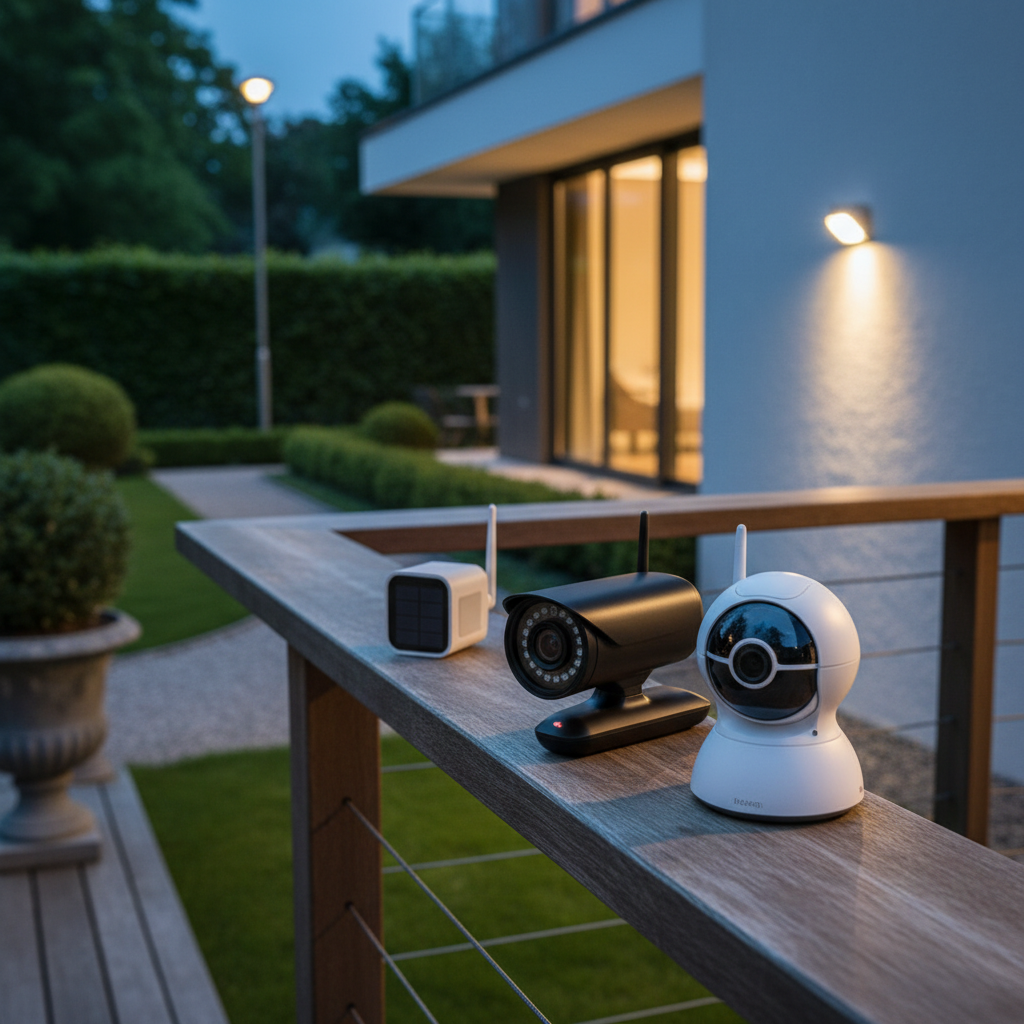
- Wireless Cameras: These cameras primarily use Wi-Fi to transmit data, making installation considerably easier as they don’t require video cabling. Many are battery-powered or solar-powered, offering flexibility in placement. While convenient, they rely on a strong Wi-Fi signal and battery life can be a consideration.
Based on Features:
- Infrared (IR) Cameras: Equipped with IR LEDs, these cameras provide black-and-white night vision by emitting invisible light, allowing them to capture clear images in complete darkness.
- Color Night Vision Cameras: Utilizing advanced sensors and often supplemented with a minimal light source (like a built-in spotlight), these cameras can produce full-color video even in low-light conditions, offering more detail than traditional IR.
- Zoom Cameras: Featuring optical or digital zoom capabilities, these allow you to magnify specific areas of interest for closer inspection.
- PTZ (Pan-Tilt-Zoom) Cameras: These cameras offer motorized control, enabling you to remotely pan (move horizontally), tilt (move vertically), and zoom the lens. This provides a dynamic field of view that can be adjusted as needed.
- Cameras with Microphones and Speakers (Two-Way Audio): These allow you to listen to audio from the camera’s location and speak through its built-in speaker, facilitating communication with visitors or deterring intruders.
- Floodlight Cameras: Integrating bright LED floodlights with a camera, these devices illuminate an area when motion is detected, enhancing night vision and acting as a visible deterrent.
Based on Shape:
- Bullet Cameras: Easily identifiable by their cylindrical, “bullet-like” shape, these are highly visible and often used for outdoor deterrence. They typically have a fixed lens and are mounted to walls or ceilings.
- Dome Cameras: Housed within a dome-shaped casing, these are more discreet and vandal-resistant. Their design makes it difficult to tell which direction the camera is facing, offering an element of surprise.
- Turret Cameras (Eyeball Cameras): A hybrid between bullet and dome, these cameras have a ball-and-socket design within a compact housing, allowing for easy adjustment of the lens while offering a more discreet profile than bullet cameras.
Comparison Table of Outdoor Camera Types
Choosing the right camera involves balancing various factors. Here’s a comparison to help illustrate the differences among common types:
| Feature | Analog Camera (with DVR) | IP Camera (Wired) | Wireless Camera (Battery/Solar) | PTZ Camera | Floodlight Camera |
|---|---|---|---|---|---|
| Resolution | Up to 1080p | 1080p to 4K+ | 1080p to 4K | 1080p to 4K | 1080p to 4K |
| Field of View | Fixed (varies by lens) | Fixed (varies by lens) or panoramic | Fixed (varies by lens) or panoramic | Dynamic (pan/tilt/zoom) | Wide-angle fixed |
| Weather Resistance | Good (IP66 typical) | Excellent (IP66/IP67 typical) | Very Good (IP65/IP66 typical) | Good (IP65/IP66 typical) | Excellent (IP66/IP67 typical) |
| Night Vision | IR (B&W) | IR, Color Night Vision | IR, Color Night Vision | IR, Color Night Vision | IR, Color Night Vision (enhanced by floodlight) |
| Smart Features | Limited | Advanced AI (person, vehicle, pet detection, facial recognition) | AI (often subscription-based for advanced features) | AI (person/vehicle tracking) | AI (person/vehicle detection, customizable zones) |
| Power Source | Wired (coaxial + power) | Wired (Ethernet/PoE) | Battery, Solar, Wired (some models) | Wired | Wired |
| Installation Ease | Moderate | Moderate to Difficult (wiring) | Easy | Moderate to Difficult (wiring, mounting) | Moderate (hardwired electrical connection) |
| Cost (Camera Only) | Low | Medium to High | Medium | High | Medium to High |
| Storage Options | DVR | NVR, Cloud, Local (microSD) | Cloud, Local (microSD, base station) | NVR, Cloud, Local (microSD) | Cloud, Local (microSD) |
Key Criteria for Choosing an Outdoor Camera
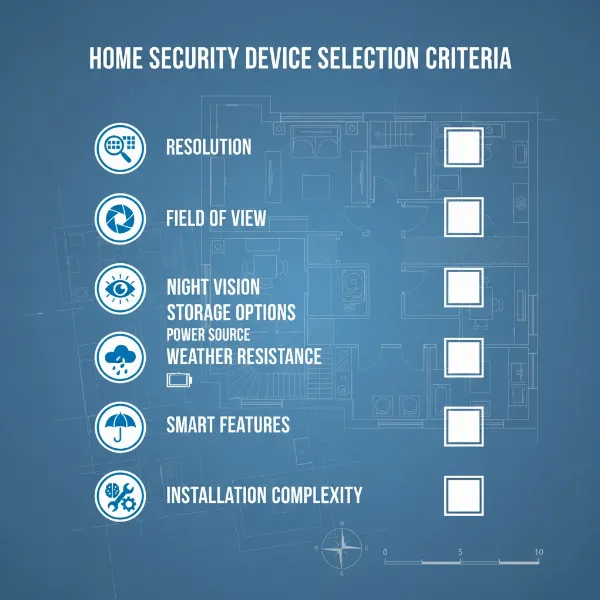
Selecting the right outdoor camera requires careful consideration of your specific needs and environmental factors. Here are the crucial criteria to guide your decision:
- Resolution: For clear identification of faces and license plates, aim for at least 1080p (Full HD) resolution. Many modern cameras offer 2K (Quad HD) or even 4K (Ultra HD), providing superior detail. Higher resolution means sharper images and better zoom capabilities for post-event analysis.
- Field of View: This refers to the width of the area the camera can capture. A wider field of view (e.g., 120-180 degrees) is ideal for covering large areas like driveways or backyards with fewer cameras. Ensure the camera’s angle covers all critical access points without overlooking blind spots.
- Weather Resistance: Outdoor cameras must withstand harsh elements. Look for an IP (Ingress Protection) rating, such as IP65, IP66, or IP67. IP65 indicates protection against dust and low-pressure water jets, IP66 against powerful water jets, and IP67 against temporary immersion. This ensures durability against rain, dust, and temperature fluctuations.
- Night Vision: Surveillance doesn’t stop after dark. Infrared (IR) night vision provides clear black-and-white images in total darkness. For enhanced detail and better identification, consider cameras with full-color night vision, often achieved through powerful sensors or integrated spotlights.
- Smart Features: Modern cameras leverage AI for intelligent monitoring. Key features include:
- Motion Detection: Triggers recording and alerts upon detecting movement.
- Person/Vehicle/Pet Detection: Filters out irrelevant alerts caused by wind or animals, notifying you only when specific objects are detected.
- Activity Zones: Allows you to define specific areas within the camera’s view where motion detection should be active or ignored, reducing false alarms.
- Facial Recognition: Some advanced systems can identify familiar faces.
- Storage Options: How your video footage is stored is vital.
- Local Storage: Using a microSD card directly in the camera or an NVR/DVR for continuous recording. This offers privacy and no recurring fees.
- Cloud Storage: Footage is uploaded to secure remote servers. This provides off-site backup, protecting recordings even if the camera is damaged or stolen. Often requires a subscription.
- Power Source:
- Wired: Offers reliable, continuous power but requires running electrical cables. Power over Ethernet (PoE) cameras receive power and data through a single Ethernet cable, simplifying installation.
- Battery-Powered: Provides flexible placement without wiring, but batteries need recharging or replacing. Battery life varies significantly based on usage.
- Solar-Powered: Utilizes a solar panel to continuously charge a battery, offering an eco-friendly and low-maintenance option for sunny locations.
- Connectivity: Most outdoor cameras connect via Wi-Fi for remote access and notifications. Some professional systems use wired Ethernet for maximum reliability. Cellular cameras are available for locations without Wi-Fi access, typically requiring a data plan.
Top Outdoor Cameras Right Now
Based on extensive testing and user feedback, here are some of the top outdoor cameras that excel in various categories, offering a blend of performance, features, and value:
1. Eufy SoloCam S340 – Best Overall
- Brand: Eufy
- Pros: Dual cameras for wide-angle and close-up views, pan-tilt-zoom (PTZ) capabilities, integrated solar panel for continuous power, 3K resolution, advanced AI analysis (person, vehicle, pet detection), two-way audio.
- Cons: Higher price point, large video files can quickly fill local storage (8GB internal).
- Price: Premium segment.
- User Reviews: Praised for its comprehensive coverage, excellent image quality, and robust feature set, particularly the solar charging.
2. Google Nest Cam (Battery) 2nd Gen – Best Smart Integration
- Brand: Google Nest
- Pros: Versatile installation (wired or battery), excellent audio/video quality, free intelligent alerts (person, motion, vehicle, animal detection), color night vision, IP54 weather rating. Integrates seamlessly with Google Home and Amazon Alexa.
- Cons: Battery is non-removable (requires taking down camera to charge), susceptible to theft if not mounted high.
- Price: Mid-range.
- User Reviews: Highly rated for its smart detection features without a subscription and user-friendly Google Home app integration.
3. Tapo MagCam 4K Solar Ultra HD Outdoor Security Camera – Best Solar Option
- Brand: Tapo (TP-Link)
- Pros: True 4K resolution, integrated solar panel provides self-sustaining power, excellent color night vision, IP66 weatherproof rating, free AI detection (person, pet, vehicle), local storage (microSD, not included).
- Cons: Fixed camera (no PTZ), 15fps video capture, microSD card not included.
- Price: Mid-range.
- User Reviews: Appreciated for its strong 4K image, reliable solar power, and free smart features, making it a great value for those seeking minimal maintenance.
4. Blink Outdoor 4 Security Camera – Easiest Setup
- Brand: Blink (Amazon)
- Pros: Extremely easy wireless setup, two-year battery life (AA batteries), 1080p resolution, wide 143-degree field of view, reliable motion triggering, good customer service.
- Cons: Only records short clips without a subscription, porch lights can interfere with night vision mode, subscription plan is needed for advanced features.
- Price: Budget-friendly.
- User Reviews: Valued for its simplicity, long battery life, and affordability, especially for those who want a hassle-free installation.
5. Reolink Elite Floodlight Wi-Fi – Best Ultra-Wide Floodlight
- Brand: Reolink
- Pros: 4K 180° ultra-wide view (dual lenses), bright 3000-lumen floodlights, excellent color night vision with floodlights active, local storage (microSD up to 512GB, not included), free AI detection (person, vehicle, animal), siren, two-way audio.
- Cons: Wired-only (requires AC power), fixed vertical view (59 degrees), no Alexa or Apple HomeKit support.
- Price: Mid-range.
- User Reviews: Highly praised for its expansive coverage, powerful illumination, and comprehensive local storage options without subscription fees.
“Investing in an outdoor camera isn’t just about security; it’s about peace of mind. The ability to see what’s happening around your home, even when you’re thousands of miles away, is truly invaluable.” – Admin, ReviewMagz.com
Outdoor Camera Installation Guide
Proper installation is key to maximizing your camera’s effectiveness and longevity. Here’s a step-by-step guide:
- Choose the Right Location:
- High vantage point: Mount cameras 8-10 feet high to deter tampering and capture a wider view.
- Cover key entry points: Focus on front doors, back doors, garages, and ground-level windows.
- Consider lighting: Avoid pointing cameras directly into strong light sources (like the sun) during peak hours to prevent glare, and ensure adequate night lighting if relying on color night vision.
- Wi-Fi signal: For wireless cameras, ensure a strong and stable Wi-Fi connection at the chosen spot.
- Power access: For wired cameras, identify nearby power outlets or plan for electrical wiring.
- Gather Tools and Materials:
- Drill, screwdriver, ladder, mounting template (if provided), screws, anchors, weatherproof sealant, cable clips (for wired cameras), and the camera itself.
- Mount the Camera:
- Mark drill holes using the mounting template.
- Drill pilot holes and insert wall anchors if needed.
- Secure the camera mount to the surface.
- Attach the camera to its mount, ensuring it’s firmly fixed.
- Connect Power and Network:
- Wired Cameras: Connect the power cable to an outlet and the Ethernet cable (if applicable) to your router or NVR.
- Wireless Cameras: Ensure batteries are charged, or solar panel is correctly positioned for optimal sunlight.
- Configure the Camera:
- Download the manufacturer’s app on your smartphone or access the web interface.
- Follow the in-app instructions to connect the camera to your Wi-Fi network (if wireless) and complete the initial setup.
- Set up crucial features: motion detection sensitivity, activity zones, notification preferences, and storage settings (cloud or local).
- Test and Adjust:
- Perform a live view check to ensure the camera is functioning.
- Walk through the camera’s field of view to test motion detection and receive alerts.
- Adjust the camera’s angle and tilt to cover the desired area, eliminating blind spots.
- Verify night vision functionality in low-light conditions.
Tips for Using and Maintaining Outdoor Cameras
To ensure your outdoor cameras operate at peak performance and last for years, consistent use and maintenance are crucial:
- Regular Cleaning: Dust, dirt, cobwebs, and water spots can obstruct the lens and reduce image clarity. Gently wipe the lens and casing with a soft, damp cloth every few months. Avoid abrasive cleaners.
- Check Connections and Power Regularly: For wired cameras, periodically inspect cables for wear, fraying, or loose connections. For battery-powered cameras, monitor battery levels via the app and recharge/replace them as needed. Ensure solar panels are clean and free from obstructions.
- Keep Software Updated: Camera manufacturers frequently release firmware updates to improve performance, add new features, and patch security vulnerabilities. Enable automatic updates or check for them regularly through the camera’s app.
- Protect from Physical Damage: While outdoor cameras are built to be robust, extreme weather events (like hail) or accidental impacts can cause damage. Ensure cameras are securely mounted and, if possible, consider adding protective covers or placing them under eaves for added shelter.
- Review Footage Periodically: Even without specific incidents, occasionally review recorded footage to ensure the camera is capturing the intended area clearly and that smart detection features are working correctly. This also helps you identify any potential blind spots or technical glitches.
- Manage Notifications: Fine-tune motion detection sensitivity and activity zones to reduce false alarms. Too many unnecessary notifications can lead to alert fatigue, causing you to miss genuine threats.
Buying Guide: What to Know Before You Buy an Outdoor Camera
Before committing to a purchase, consider these essential points to ensure you choose an outdoor camera that perfectly aligns with your security goals and budget.
- Budget Assessment: Outdoor cameras range widely in price. Determine how much you’re willing to spend, keeping in mind that higher-end models often offer superior resolution, advanced AI, and more robust weather resistance. Factor in potential recurring costs for cloud storage or professional monitoring.
- Specific Usage Needs: What exactly do you want to monitor? Do you need to see a wide area, or focus on a specific entry point? Is continuous recording essential, or are motion-triggered clips sufficient? Do you need two-way audio to communicate with visitors or delivery personnel? Answering these questions will help narrow down features.
- Essential Features Checklist: Prioritize features like resolution (1080p, 2K, or 4K), night vision type (IR or color), weather resistance rating (IP65/IP66/IP67), and smart detection capabilities (person/vehicle/pet). Decide on your preferred power source (wired, battery, solar) and storage method (local or cloud).
- Reputable Brands: Stick with well-known and trusted brands in the security camera industry, such as Eufy, Google Nest, Ring, Arlo, Reolink, and Blink. These brands typically offer better product support, more reliable apps, and regular software updates.
- Warranty and Support: Check the manufacturer’s warranty period and customer support availability. A good warranty provides peace of mind, and accessible support is crucial if you encounter any issues during setup or operation.
- Privacy and Data Security: With smart cameras, data privacy is paramount. Ensure the brand you choose prioritizes security with features like two-factor authentication, end-to-end encryption, and clear privacy policies. Regularly create strong, unique passwords for your camera apps.
Conclusion
Choosing the right outdoor camera is a vital step in fortifying your home or business against potential threats. From high-definition video and advanced night vision to intelligent AI detection and flexible power options, today’s outdoor cameras offer an unparalleled level of surveillance and peace of mind. By carefully considering your specific needs, understanding the various types and features available, and following expert recommendations, you can confidently select a solution that provides robust security for years to come. What specific security challenge are you hoping an outdoor camera will help you overcome?
Frequently Asked Questions
What is the best resolution for an outdoor camera?
|
Our Picks for the Best Outdoor camera in 2026
As an Amazon Associate I earn from qualifying purchases.
|
||
| Num | Product | Action |
|---|---|---|
| 1 | GMK Security Cameras Wireless Outdoor 4 Pack, 2K Battery Powered Cameras for Home Security, Color Night Vision, Motion Detection, 2-Way Talk, IP65 Waterproof, Remote Access, Cloud/SD Storage |

|
| 2 | Security Cameras Wireless Outdoor 355° Pan Rotating 2K Color Night Vision Cameras for Home Security WiFi Battery Outdoor Camera Motion Detection 2-Way Talk IP65 Spotlight Siren SD/Cloud Storage 2 Pack |
|
| 3 | Blink Outdoor 4 – Wireless smart security camera, two-year battery life, 1080p HD day and infrared night live view, two-way talk. Sync Module Core included – 3 camera system |
|
| 4 | Ring Outdoor Cam Plus, Battery (newest model), Home or business security, Wide-Angle 2K Video with Ring Vision, Low-Light Sight for full-color night vision, Mount-Anywhere Versatility, Black |
|
| 5 | aosu Security Cameras Outdoor Wireless, 4 Cam-Kit, No Subscription Required, Solar-Powered, Home Security Cameras System with 360° Pan & Tilt, Auto Tracking, 2K Color Night Vision, Easy Setup |
|
| 6 | All-new Blink Video Doorbell + Outdoor 4 – Wireless smart security cameras, head-to-toe HD view, two-year battery life. Sync Module Core included – 2 camera system + Video Doorbell |
|
| 7 | Ring Outdoor Cam (Stick Up Cam), Weather-resistant home or business security camera, outdoor ready, Live View, Color Night Vision, Two-Way Talk, motion alerts, Works with Alexa, White |
|
| 8 | eufy Security 3K Dual Camera, SoloCam S340, Solar Security Cameras Wireless Outdoor, Cameras for Home Security, 360°Coverage, Pan & Tilt, No Blind Spots, No Monthly Fee, HomeBase S380 Compatible |
|
| 9 | 2026 Upgraded 2K Security Cameras Wireless Outdoor, Free Cloud Storage, 1-6 Months Battery Life, Waterproof, 2-Way Talk, AI Motion Detection Spotlight Siren Alarm Cameras for Home Security |
|
| 10 | WYZE Cam v4 (Latest Model), 2.5K AI Security Camera, Indoor/Outdoor Cameras for Home Security, Baby Monitor & Pet Camera, Vibrant Color Night Vision, No Subscription Required, Free Expert Help |
|
For reliable identification, an outdoor camera should have at least 1080p (Full HD) resolution. However, 2K or 4K cameras offer significantly clearer images and greater detail, making it easier to discern faces, license plates, and other critical information.
Do outdoor cameras require a monthly subscription?
Many outdoor cameras offer optional monthly subscriptions for enhanced features like cloud storage, extended video history, and advanced AI detection. While most can function without a subscription, paid plans often unlock the camera’s full potential. Some cameras provide free local storage options via microSD cards or NVRs.
How do wired and wireless outdoor cameras compare?
Wired cameras (often PoE) offer maximum reliability and continuous power without battery concerns, but require more complex installation. Wireless cameras provide greater installation flexibility due to fewer cables, often using batteries or solar power, but depend on stable Wi-Fi and may require battery recharging.
What does “weatherproof” mean for an outdoor camera?
“Weatherproof” typically refers to a camera’s IP (Ingress Protection) rating. For outdoor use, look for ratings like IP65, IP66, or IP67, which indicate protection against dust, rain, and other environmental elements. A higher IP rating generally means better resistance to harsh weather conditions.
Can outdoor cameras deter crime?
Yes, the visible presence of an outdoor camera can act as a significant deterrent to potential intruders. Beyond deterrence, they provide invaluable video evidence that can assist law enforcement in investigations and prosecutions if a crime does occur.