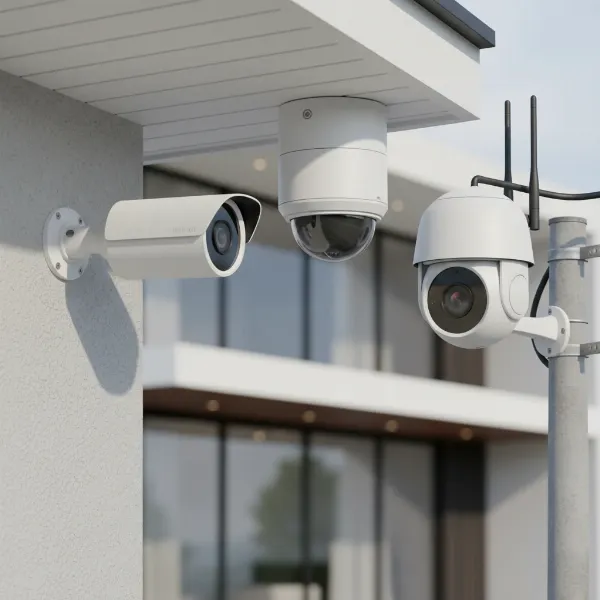
Ensuring the safety and security of your property is a top priority for homeowners and businesses alike. With advancements in technology, outdoor security cameras have evolved from simple surveillance tools into sophisticated systems offering unparalleled peace of mind. These vigilant guardians provide a critical layer of defense, deterring potential intruders, capturing crucial evidence, and delivering real-time alerts directly to your device, no matter where you are. In this comprehensive guide, we will delve into the world of outdoor cameras, exploring the various types, essential features, installation considerations, and maintenance tips to help you make an informed decision and safeguard what matters most.
Outdoor Security Cameras: An Essential Layer of Protection
Outdoor security cameras play an indispensable role in modern security strategies, acting as both a deterrent and a powerful investigative tool. The mere presence of visible cameras can significantly reduce the likelihood of criminal activity, with studies indicating that visible camera installations can decrease retail theft by a substantial margin. Beyond deterrence, these cameras provide continuous monitoring of your property, capturing high-quality footage day and night. This visual record is invaluable in identifying individuals, vehicles, or suspicious activities, offering concrete evidence for law enforcement and insurance claims. Ultimately, a robust outdoor camera system enhances your overall home security, giving you real-time insights and the ultimate peace of mind.
Types of Outdoor Cameras: Finding Your Perfect Match
The market offers a diverse array of outdoor security cameras, each designed with specific functionalities and aesthetic considerations. Understanding the different types available will help you select the ideal solution that aligns with your security needs and property layout.
Technology-Based Categories:
- Wired Cameras: These cameras connect directly to a power source and often use Ethernet cables for data transmission (Power over Ethernet – PoE). They offer the most reliable connection, free from Wi-Fi interference, and eliminate concerns about battery life. However, installation can be more complex, requiring careful cable routing.
- Wireless Cameras: Offering greater flexibility in placement, wireless cameras connect to your home network via Wi-Fi. Many are battery-powered, making installation straightforward as no electrical wiring is needed. Some models also support solar panels for continuous charging. The trade-off can be battery maintenance and potential Wi-Fi signal issues.
- IP Cameras (Internet Protocol): A broad category, IP cameras transmit video footage over an internet protocol network. Both wired and wireless cameras can be IP cameras. They typically offer higher resolutions, advanced features, and remote access via mobile apps or web browsers.
Feature and Shape-Based Categories:
- Bullet Cameras: Characterized by their cylindrical shape, bullet cameras are highly visible and serve as an effective deterrent. They excel at long-range surveillance, making them ideal for monitoring perimeters, driveways, and large open areas. Their installation is generally straightforward, and many come with built-in night vision.
- Dome Cameras: Named for their discreet, dome-shaped housing, these cameras are designed to blend seamlessly into their surroundings. They are often mounted on ceilings or eaves, making it difficult for intruders to determine the camera’s exact viewing direction.
- Turret Cameras: Also known as “eyeball” cameras, turret cameras share the discreet profile of dome cameras but feature an adjustable lens housed in a separate, protruding eyeball-like structure. They offer flexibility in aiming without the dome’s glare issues.
- PTZ (Pan-Tilt-Zoom) Cameras: These advanced cameras allow you to remotely control their movement – panning horizontally, tilting vertically, and zooming in or out. PTZ cameras provide 360-degree coverage of large spaces, reducing the need for multiple fixed cameras. They are most effective when actively monitored.
- Floodlight Cameras: Combining security lighting with a camera and often a siren, floodlight cameras are excellent for deterring intruders. They activate powerful lights upon detecting motion, illuminating the area and capturing clear, often color, footage at night.
- Outdoor Doorbell Cameras: Integrated into your doorbell, these cameras provide surveillance for your entryway, complete with two-way audio, motion alerts, and often facial recognition.
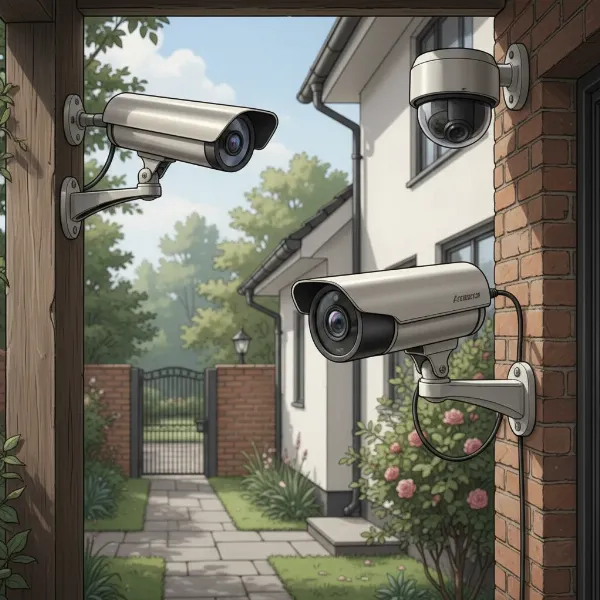 Different types of outdoor security cameras for home surveillance, showing bullet, dome, and PTZ models
Outdoor Camera Comparison: Key Features at a Glance
When selecting an outdoor camera, several crucial features differentiate models and impact their performance. This table provides a quick comparison of essential criteria.
| Feature | Description |
|---|---|
| Resolution | Determines image clarity. Options typically range from 1080p (Full HD) to 2K (Quad HD), 3K, and 4K (Ultra HD). Higher resolutions offer sharper details, which are critical for identifying faces or license plates. |
| Field of View (FOV) | The horizontal angle the camera’s lens can capture. A wider FOV (e.g., 120° to 160°) covers more ground with fewer cameras, minimizing blind spots. |
| Weather Resistance | Essential for outdoor cameras. Indicated by an IP (Ingress Protection) rating. Look for IP65, IP66 (dust-tight, strong water jet resistance), or IP67 (adds short-term submersion resistance) to ensure durability against rain, dust, and extreme temperatures. |
| Night Vision | Allows the camera to see in low light or complete darkness. Infrared (IR) night vision provides black-and-white images. Advanced cameras offer color night vision, often assisted by built-in spotlights, providing more detailed and useful footage at night. |
| Smart Features | Includes advanced capabilities like AI-powered person and vehicle detection, customizable activity zones to reduce false alerts, two-way audio for communication, and integrated sirens/alarms for deterrence. Some high-end models feature facial recognition. |
| Storage Options | Local: MicroSD cards or Network Video Recorders (NVRs)/Digital Video Recorders (DVRs) store footage directly on-site, offering privacy and no subscription fees. Capacity can be limited. Cloud: Footage is uploaded to secure remote servers, accessible from anywhere, often requiring a subscription for larger capacity and advanced features. Hybrid: Combines both local and cloud storage for redundancy. |
| Power Source | Wired (PoE/Plug-in): Offers reliable, continuous power without battery concerns. Requires access to an electrical outlet or Ethernet cabling. Wireless (Battery/Solar): Provides flexible placement. Battery-powered cameras require recharging (every few months to several years), while solar panels can offer continuous charging for compatible models. |
| Connectivity | Most smart cameras use Wi-Fi (2.4GHz or 5GHz) for home network integration and remote access. Some use Ethernet for a stable wired connection. Compatibility with smart home ecosystems like Alexa, Google Assistant, or Apple HomeKit and open standards like ONVIF is also a key factor for integration. |
Essential Criteria for Choosing an Outdoor Camera
Selecting the right outdoor camera system requires careful consideration of your specific needs, budget, and property characteristics. Here’s a detailed breakdown of the critical factors to evaluate:
- Resolution: The clarity of your video footage is paramount for effective surveillance. While 1080p provides good detail, opting for higher resolutions like 2K, 3K, or 4K will deliver sharper images, making it significantly easier to identify faces, license plates, or other crucial details. Higher resolution can also reduce the number of cameras needed to cover a large area effectively.
- Field of View (FOV): Consider the area you need to monitor. A wide-angle lens (typically 100° or more) can cover a broader expanse, reducing blind spots and potentially the number of cameras you need. PTZ cameras offer dynamic control over the FOV, but fixed cameras with a wide lens are often more practical for continuous, comprehensive coverage.
- Weather Resistance and Durability: Outdoor cameras must withstand the elements. Always check the Ingress Protection (IP) rating. An IP65, IP66, or IP67 rating indicates strong resistance to dust and water, ensuring the camera functions reliably through rain, snow, and extreme temperatures. High-quality materials like metal or heavy-duty plastic also contribute to longevity.
- Night Vision Capabilities: Most outdoor cameras come with infrared (IR) night vision, providing clear black-and-white footage in complete darkness. For enhanced detail and color information at night, look for cameras offering color night vision, often achieved through built-in spotlights or advanced sensors.
- Smart Features: Modern cameras offer a suite of intelligent features. AI-powered person and vehicle detection minimizes false alarms from pets or swaying branches. Customizable activity zones allow you to focus alerts on specific areas. Two-way audio enables you to communicate with visitors or deter intruders. Integration with smart home systems and siren capabilities further enhances security.
- Storage Options: Decide how you want your footage stored. Local storage via a microSD card or an NVR/DVR offers privacy and avoids monthly fees. Cloud storage provides remote access, greater capacity, and off-site backup, though typically requires a subscription. A hybrid approach combining both can offer the best of both worlds.
- Power Source: Your choice of power impacts installation flexibility. Wired cameras (PoE or plug-in) provide continuous, reliable power. Battery-powered cameras are easy to install anywhere, but require periodic recharging. Solar-powered options extend battery life significantly, making them a low-maintenance choice for sunny locations.
- Connectivity and Compatibility: Most smart outdoor cameras connect to your home Wi-Fi network. Ensure your chosen camera supports your Wi-Fi band (2.4GHz or 5GHz) for optimal signal. Consider compatibility with existing smart home ecosystems like Amazon Alexa, Google Assistant, or Apple HomeKit for seamless integration and control.
Top Outdoor Cameras on the Market Today
The outdoor camera market is brimming with innovative products. Here are a few standout models that exemplify excellent features and performance, based on recent reviews and user feedback:
- Eufy SoloCam S340: Often hailed as an “overall best” choice, the Eufy SoloCam S340 boasts dual cameras, pan-tilt-zoom (PTZ) capabilities, and a built-in solar panel for continuous charging. It delivers sharp 3K resolution video and offers local storage, making it a robust and feature-rich option for comprehensive coverage.
- Arlo Pro 5S 2K: This high-end camera offers impressive 2K HDR video quality and dual-band Wi-Fi for fast, reliable alerts without the need for a separate smart hub. It features a wide 160-degree field of view and is known for its easy setup and strong smart home integrations. For those seeking 4K, the Arlo Ultra 2 is a premium alternative.
- Blink Outdoor 4: A popular budget-friendly option, the Blink Outdoor 4 provides basic 1080p coverage with an incredibly long battery life (up to two years). It’s compact, easy to install, and integrates seamlessly with Alexa. While image sharpness might not match higher-end models, its affordability and ease of use make it a compelling choice for straightforward monitoring.
- Tapo MagCam: This camera stands out for its exceptional battery life, offering up to 300 days on a single charge, with an optional solar panel for continuous power. It provides 2K resolution, a wide field of view, and excellent two-way audio, making it a versatile and low-maintenance choice.
- Ring Floodlight Cam Wired Pro: For enhanced deterrence and advanced motion detection, the Ring Floodlight Cam Wired Pro is a strong contender. It combines powerful floodlights, a siren, and 3D motion detection with radar for superior accuracy, ensuring that any suspicious activity is not only recorded but also actively discouraged.
Step-by-Step Outdoor Camera Installation Guide
Proper installation is key to your outdoor camera’s performance and longevity. Follow these steps for a safe and effective setup:
-
Plan Your Placement:
- Identify Crucial Zones: Walk around your property to identify high-traffic areas, entry points (doors, windows, garage), and valuable assets you want to protect.
- Optimal Height: Mount cameras 8-10 feet off the ground to prevent tampering and provide a broad overview. Avoid placing them too high, which can obscure facial recognition.
- Avoid Obstructions: Ensure the camera’s view is clear of branches, bushes, or other objects that could block the lens or trigger false motion alerts.
- Check Wi-Fi Signal: For wireless cameras, test the Wi-Fi strength at your chosen location. A strong, stable connection is crucial for reliable performance.
- Power Access: For wired cameras, plan cable runs to easily accessible power outlets or consider Power over Ethernet (PoE) for simplified wiring.
-
Gather Your Tools and Materials:
- Tools: Drill, screwdriver (Phillips head recommended), ladder, cable tester (for wired systems).
- Mounting Hardware: Rust-resistant screws, anchors (for masonry), brackets (often included with the camera).
- Cabling (for wired systems): Weather-resistant Ethernet cables (Cat5e or Cat6), waterproof RJ45 couplers, cable clips/conduit for protection.
- Protection: Weatherproof junction boxes or enclosures for exposed connections, silicone sealant for sealing entry points.
-
Mount the Camera:
- Attach the Mounting Bracket: Secure the camera’s mounting bracket to the chosen surface (wood, masonry, siding) using appropriate screws and anchors. Ensure it’s level.
- Run Cables (if wired): Carefully route Ethernet or power cables along walls, under eaves, or through conduit to protect them from the elements and hide them from view. Use weatherproof junction boxes for all outdoor connections.
- Connect Power: For PoE cameras, connect the Ethernet cable directly to a PoE switch or NVR. For non-PoE setups, use weatherproof power adapters and enclosures near outdoor outlets.
- Attach Camera: Mount the camera onto the bracket, securing it firmly.
-
Configure and Test:
- Connect to App: Follow the manufacturer’s instructions to connect your camera to its mobile app.
- Adjust Angle: Use the live feed on your app to fine-tune the camera’s angle and field of view, ensuring optimal coverage and minimal blind spots.
- Test Features: Verify that night vision, motion detection, two-way audio, and other smart features are working correctly. Adjust sensitivity settings as needed to prevent false alarms.
- Secure Cables: Use cable clips or conduit to tidy and secure any exposed wiring, further protecting it from weather and tampering.
Maximizing Longevity: Tips for Outdoor Camera Maintenance
Regular maintenance is crucial for ensuring your outdoor cameras perform optimally and last for years. Neglecting these simple steps can lead to blurry footage, missed events, or complete system failure.
- Regular Cleaning: Outdoor cameras are exposed to dust, dirt, pollen, spider webs, and even insect nests. Clean the camera lens and housing at least once a month, or more frequently after severe weather. Use a soft microfiber cloth and avoid abrasive materials or harsh chemicals that could scratch the lens. Gently wipe away any buildup, and check for condensation inside dome covers, resealing them if found.
- Inspect Mounts and Connections: Strong winds, vibrations, or general wear and tear can loosen camera mounts. Periodically check that all mounting hardware is secure. Inspect power cables and network connections for any signs of fraying, damage, or corrosion. Ensure all weatherproof seals and junction boxes are intact and providing adequate protection.
- Firmware and Software Updates: Manufacturers frequently release firmware updates to improve camera performance, enhance security features, and fix bugs. Regularly check for and install these updates via your camera’s mobile app or software to keep your system running smoothly and protect against vulnerabilities.
- Clear Surrounding Obstructions: Over time, plants can grow, or new objects may appear that obstruct your camera’s field of view. Regularly trim foliage, remove spider webs, or reposition any items that could block the lens or interfere with motion detection.
- Monitor Video Quality and Storage: Periodically review recorded footage to ensure image quality remains clear and consistent. Check your storage solution (SD card, NVR, or cloud) to confirm that footage is being recorded and stored correctly. Back up important footage regularly, especially if relying solely on local storage.
- Test Remote Access and Alerts: Confirm that you can reliably access your camera’s live feed and recorded footage remotely through your app. Test motion alerts to ensure they are being sent promptly and accurately.
- Battery Management (for wireless cameras): If you have battery-powered cameras, monitor their battery levels regularly and recharge or replace them as needed. Consider adding solar panels for compatible models to reduce maintenance frequency.
- Professional Inspections: While many maintenance tasks can be done yourself, a professional inspection once a year can help identify less obvious issues, optimize system settings, and extend the overall lifespan of your security system.
Buying Smart: Your Pre-Purchase Checklist for Outdoor Cameras
Before making a final decision on your outdoor camera system, take a moment to consider these crucial points. A well-thought-out purchase will ensure you get a system that truly meets your needs and provides lasting security.
- Define Your Budget: Outdoor cameras range widely in price. Determine how much you’re willing to invest, considering both the upfront cost of the hardware and any potential ongoing subscription fees for cloud storage or advanced features.
- Identify Your Specific Needs: Are you looking to deter package theft, monitor a large property, keep an eye on your children playing, or simply add a layer of general surveillance? Your primary objective will influence the types of cameras and features you prioritize.
- Prioritize Essential Features: Based on your needs, make a list of “must-have” features (e.g., 2K resolution, color night vision, person detection) versus “nice-to-have” features (e.g., PTZ, advanced analytics). Don’t pay for features you won’t use.
- Research Reputable Brands: Stick to well-known and trusted brands in the security camera industry. These companies typically offer better product support, more reliable software, and more frequent updates.
- Check Warranty and Return Policies: Understand the manufacturer’s warranty, return policy, and customer support options. A good warranty provides peace of mind in case of defects or early failures.
- Consider Scalability: Think about your future security needs. Can you easily add more cameras to the system later? Will the system integrate with other smart home devices you plan to acquire?
Frequently Asked Questions
Do outdoor cameras require a monthly subscription?
|
Our Picks for the Best Outdoor camera in 2026
As an Amazon Associate I earn from qualifying purchases.
|
||
| Num | Product | Action |
|---|---|---|
| 1 | All-new Blink Video Doorbell + Outdoor 4 – Wireless smart security cameras, head-to-toe HD view, two-year battery life. Sync Module Core included – 2 camera system + Video Doorbell |

|
| 2 | Ring Outdoor Cam (Stick Up Cam), Weather-resistant home or business security camera, outdoor ready, Live View, Color Night Vision, Two-Way Talk, motion alerts, Works with Alexa, White |
|
| 3 | 2026 Upgraded 2K Security Cameras Wireless Outdoor, Free Cloud Storage, 1-6 Months Battery Life, Waterproof, 2-Way Talk, AI Motion Detection Spotlight Siren Alarm Cameras for Home Security |
|
| 4 | Ring Outdoor Cam Plus, Battery (newest model), Home or business security, Wide-Angle 2K Video with Ring Vision, Low-Light Sight for full-color night vision, Mount-Anywhere Versatility, Black |
|
| 5 | eufy Security 3K Dual Camera, SoloCam S340, Solar Security Cameras Wireless Outdoor, Cameras for Home Security, 360°Coverage, Pan & Tilt, No Blind Spots, No Monthly Fee, HomeBase S380 Compatible |
|
| 6 | GMK Security Cameras Wireless Outdoor 4 Pack, 2K Battery Powered Cameras for Home Security, Color Night Vision, Motion Detection, 2-Way Talk, IP65 Waterproof, Remote Access, Cloud/SD Storage |
|
| 7 | WYZE Cam v4 (Latest Model), 2.5K AI Security Camera, Indoor/Outdoor Cameras for Home Security, Baby Monitor & Pet Camera, Vibrant Color Night Vision, No Subscription Required, Free Expert Help |
|
| 8 | Blink Outdoor 4 – Wireless smart security camera, two-year battery life, 1080p HD day and infrared night live view, two-way talk. Sync Module Core included – 3 camera system |
|
| 9 | aosu Security Cameras Outdoor Wireless, 4 Cam-Kit, No Subscription Required, Solar-Powered, Home Security Cameras System with 360° Pan & Tilt, Auto Tracking, 2K Color Night Vision, Easy Setup |
|
| 10 | Security Cameras Wireless Outdoor 355° Pan Rotating 2K Color Night Vision Cameras for Home Security WiFi Battery Outdoor Camera Motion Detection 2-Way Talk IP65 Spotlight Siren SD/Cloud Storage 2 Pack |
|
Many outdoor cameras offer optional monthly subscriptions for features like cloud storage, extended video history, or advanced AI detection. While some basic functionalities might be free, a subscription often unlocks the full potential of the camera. Cameras with local storage options (like microSD cards or NVRs) can operate without a subscription, providing privacy and no recurring fees.
How long do battery-powered outdoor cameras typically last on a single charge?
Battery life for outdoor cameras varies significantly depending on the model, usage frequency, and environmental conditions. Some cameras, like the Blink Outdoor 4, boast up to two years of battery life, while others may require recharging every few months. High traffic areas and colder temperatures can drain batteries faster. Many models now offer solar panel accessories to extend battery life indefinitely.
Can outdoor cameras withstand extreme weather conditions?
Yes, outdoor cameras are specifically designed to be weather-resistant. Look for models with an IP (Ingress Protection) rating of IP65, IP66, or IP67. These ratings indicate the camera’s ability to withstand dust, heavy rain, and sometimes even temporary submersion. Always check the operating temperature range to ensure the camera performs in your local climate extremes.
Is it difficult to install an outdoor security camera myself?
Many modern outdoor cameras are designed for DIY installation, especially wireless, battery-powered models. These typically involve simple mounting with screws and connecting through a mobile app. Wired systems, especially those requiring complex cable routing or connecting to an NVR, might be more challenging and could benefit from professional installation, particularly if drilling through walls is required.
What is the ideal resolution for an outdoor security camera?
For general surveillance, 1080p (Full HD) is a good starting point. However, for clearer details, especially for identifying faces or license plates, a 2K (Quad HD) resolution or higher (3K, 4K) is ideal. Higher resolution cameras provide more usable evidence and can cover larger areas with better clarity, enhancing overall security effectiveness.