In today’s interconnected world, securing your home extends beyond traditional locks and alarms. The modern smart home leverages technology to offer unparalleled peace of mind, with outdoor cameras playing a pivotal role. These sophisticated devices act as your vigilant eyes, providing real-time surveillance and integrating seamlessly into your digital ecosystem. Whether you’re looking to deter intruders, keep an eye on deliveries, or simply monitor your property, choosing the right outdoor smart camera can transform your home’s security posture. This comprehensive guide will navigate you through the essential features, top models, and critical considerations to help you find the perfect outdoor camera for your smart home.
Outdoor Cameras: An Essential Smart Home Security Solution
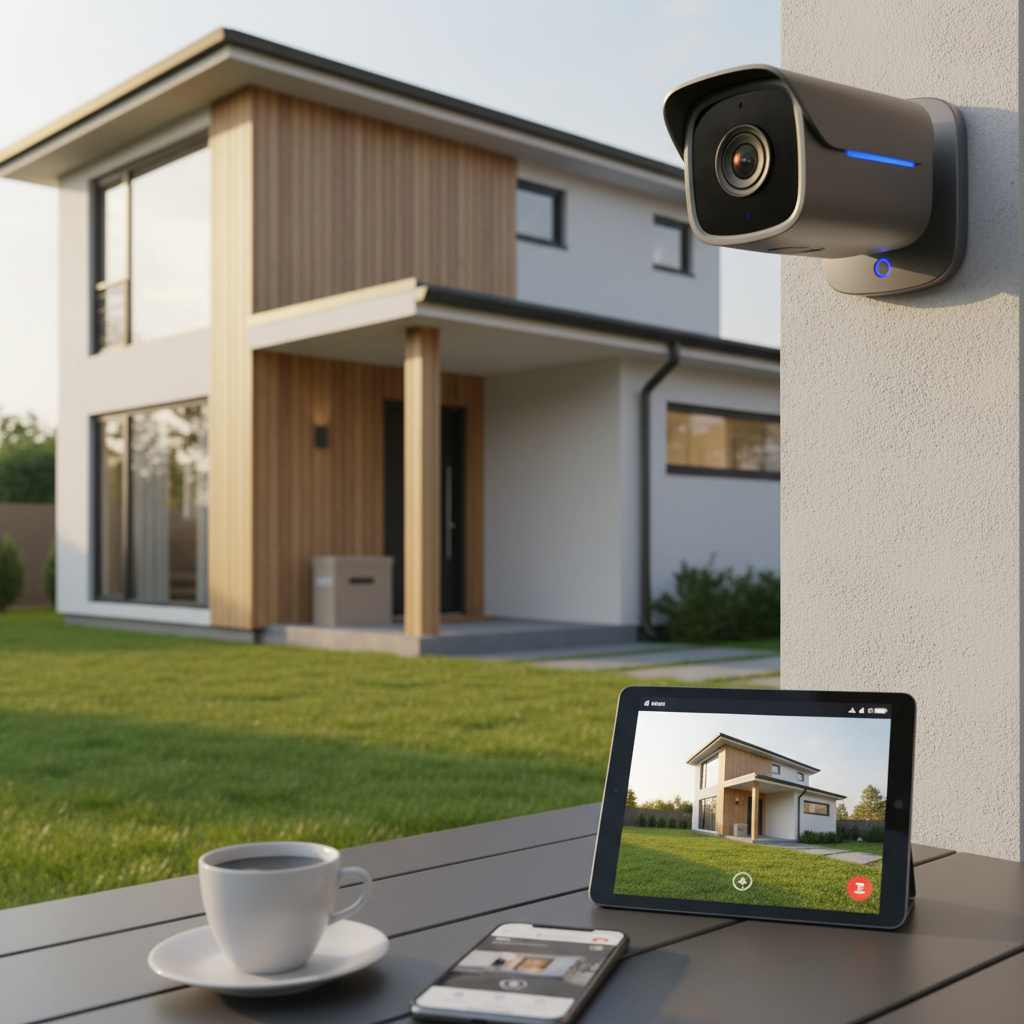
Outdoor cameras are no longer just about recording footage; they are integral components of a robust smart home security system, acting as the first line of defense against potential threats. They provide critical visual evidence, deter criminal activity, and offer invaluable insights into what’s happening around your property, even when you’re away. Integrating these cameras into your smart home allows for automated responses, such as turning on lights when motion is detected or locking doors if an unfamiliar face is identified. This proactive approach to security empowers homeowners with greater control and awareness, significantly enhancing the safety of their families and assets.
Types of Outdoor Cameras for Smart Homes
The landscape of outdoor smart cameras is diverse, offering various technologies and features designed to meet different security needs and preferences. Understanding these types is crucial for making an informed decision that aligns with your smart home setup.
-
By Technology:
- Wired IP Cameras: These cameras connect directly to your home’s network via an Ethernet cable and draw power through the same cable (Power over Ethernet – PoE) or a separate power adapter. They offer reliable, stable connections and continuous recording without battery concerns. Many advanced wired IP cameras integrate with NVRs (Network Video Recorders) for extensive local storage.
- Wireless IP Cameras: Utilizing Wi-Fi, these cameras offer flexible placement without the need for extensive wiring for data. They typically require a power outlet, though some are battery-powered, increasing installation versatility.
- Battery-Powered Cameras: Offering ultimate flexibility in placement, these cameras run on rechargeable batteries, eliminating the need for any wiring. Their battery life varies based on usage and environmental factors, often ranging from a few months to over a year between charges.
- Solar-Powered Cameras: A subtype of battery-powered cameras, these include a small solar panel to continuously recharge their battery, providing an eco-friendly and low-maintenance power solution, ideal for sunny locations.
-
By Features:
- Infrared (IR) Night Vision: Most common, providing clear black-and-white video in low-light or complete darkness.
- Color Night Vision: Achieved through advanced sensors or integrated spotlights, allowing cameras to capture full-color video even at night, offering greater detail.
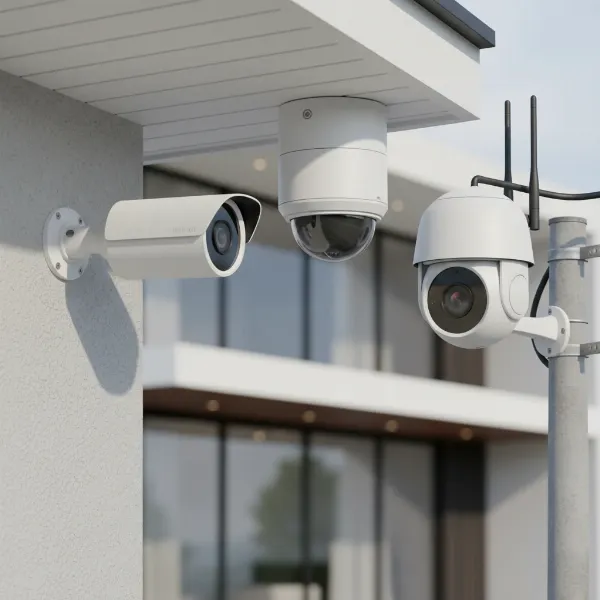
- Pan-Tilt-Zoom (PTZ) Cameras: These cameras allow you to remotely control their viewing angle (pan horizontally, tilt vertically) and zoom in on specific areas, providing a broader surveillance range with a single device.
- AI Detection: Modern smart cameras leverage artificial intelligence to differentiate between people, vehicles, animals, and packages, significantly reducing false alerts and offering more relevant notifications. Some even feature facial recognition for personalized alerts.
- Two-Way Audio: A built-in microphone and speaker enable you to listen in and communicate with visitors or deter unwanted guests.
- Floodlight Cameras: These integrate powerful LED floodlights that illuminate an area when motion is detected, enhancing night vision and acting as a strong visual deterrent. They often come with integrated sirens.
- Siren: A built-in siren can be triggered manually or automatically upon detection of suspicious activity to scare off intruders.
-
By Form Factor:
- Bullet Cameras: Cylindrical in shape, these are highly visible and often used for directed surveillance over a specific area.
- Dome Cameras: Designed with a discreet, dome-shaped casing, making them less conspicuous and harder to tamper with.
- Turret Cameras: A hybrid of bullet and dome, offering a flexible ball-joint mount for easy adjustment while maintaining a discreet profile, often without the dome’s reflection issues.
Key Features to Consider When Choosing a Smart Outdoor Camera
Selecting the ideal outdoor camera for your smart home involves weighing several critical features to ensure it meets your security demands and integrates seamlessly with your existing smart ecosystem.
Resolution
|
Our Picks for the Best Outdoor camera in 2026
As an Amazon Associate I earn from qualifying purchases.
|
||
| Num | Product | Action |
|---|---|---|
| 1 | 2026 Upgraded 2K Security Cameras Wireless Outdoor, Free Cloud Storage, 1-6 Months Battery Life, Waterproof, 2-Way Talk, AI Motion Detection Spotlight Siren Alarm Cameras for Home Security |

|
| 2 | WYZE Cam v4 (Latest Model), 2.5K AI Security Camera, Indoor/Outdoor Cameras for Home Security, Baby Monitor & Pet Camera, Vibrant Color Night Vision, No Subscription Required, Free Expert Help |
|
| 3 | Security Cameras Wireless Outdoor 355° Pan Rotating 2K Color Night Vision Cameras for Home Security WiFi Battery Outdoor Camera Motion Detection 2-Way Talk IP65 Spotlight Siren SD/Cloud Storage 2 Pack |
|
| 4 | Blink Outdoor 4 – Wireless smart security camera, two-year battery life, 1080p HD day and infrared night live view, two-way talk. Sync Module Core included – 3 camera system |
|
| 5 | eufy Security 3K Dual Camera, SoloCam S340, Solar Security Cameras Wireless Outdoor, Cameras for Home Security, 360°Coverage, Pan & Tilt, No Blind Spots, No Monthly Fee, HomeBase S380 Compatible |
|
| 6 | All-new Blink Video Doorbell + Outdoor 4 – Wireless smart security cameras, head-to-toe HD view, two-year battery life. Sync Module Core included – 2 camera system + Video Doorbell |
|
| 7 | aosu Security Cameras Outdoor Wireless, 4 Cam-Kit, No Subscription Required, Solar-Powered, Home Security Cameras System with 360° Pan & Tilt, Auto Tracking, 2K Color Night Vision, Easy Setup |
|
| 8 | Ring Outdoor Cam (Stick Up Cam), Weather-resistant home or business security camera, outdoor ready, Live View, Color Night Vision, Two-Way Talk, motion alerts, Works with Alexa, White |
|
| 9 | GMK Security Cameras Wireless Outdoor 4 Pack, 2K Battery Powered Cameras for Home Security, Color Night Vision, Motion Detection, 2-Way Talk, IP65 Waterproof, Remote Access, Cloud/SD Storage |
|
| 10 | Ring Outdoor Cam Plus, Battery (newest model), Home or business security, Wide-Angle 2K Video with Ring Vision, Low-Light Sight for full-color night vision, Mount-Anywhere Versatility, Black |
|
The clarity of your camera’s footage is paramount for identification and evidence. While 1080p (Full HD) is a common standard offering decent detail, 2K (Quad HD) and 4K (Ultra HD) resolutions provide significantly sharper images, allowing you to zoom in on fine details like license plates or faces. However, higher resolution demands more bandwidth and storage space, potentially increasing cloud storage costs.
Field of View
The field of view (FoV) determines how wide an area your camera can capture. A wider FoV (e.g., 130-180 degrees) is beneficial for covering large areas with fewer cameras. Some cameras offer mechanical pan and tilt functions, allowing you to remotely adjust the viewing angle, maximizing coverage from a single installation point. Be mindful of privacy and ensure your camera isn’t inadvertently recording neighboring properties.
Weather Resistance
Outdoor cameras must endure various environmental conditions. Look for an Ingress Protection (IP) rating, which indicates the camera’s resistance to dust and water. An IP65 rating signifies protection against dust ingress and water jets, making it suitable for most outdoor conditions. An IP66 rating offers stronger protection against powerful water jets, ideal for areas prone to heavy rain or direct exposure to sprinklers.
Night Vision
Effective night vision is crucial for 24/7 surveillance.
- Infrared (IR) night vision uses IR LEDs to capture clear black-and-white video in total darkness, with typical ranges of 20-50 feet.
- Color night vision employs advanced sensors and sometimes integrated spotlights to provide full-color video at night, offering superior detail and clarity for identifying objects and individuals.
- Integrated floodlights serve a dual purpose: illuminating the scene for color night vision and acting as a visible deterrent to potential intruders.
Smart AI Detection
Modern outdoor cameras go beyond basic motion detection. AI-powered smart detection can differentiate between people, vehicles, pets, and packages, sending specific alerts only for what matters. This feature significantly reduces false alarms triggered by swaying branches or passing animals. Advanced AI can also include facial recognition, allowing you to get personalized alerts for family members or known visitors. Customizable activity zones further refine detection, focusing surveillance on specific areas while ignoring others.
Smart Home Ecosystem Compatibility
Seamless integration with your existing smart home platform is a key differentiator.
- Amazon Alexa and Google Assistant are widely supported, enabling voice commands to view live feeds on smart displays (like Echo Show or Nest Hub) or trigger routines.
- Apple HomeKit provides a secure, privacy-focused ecosystem, often requiring specific HomeKit-enabled cameras.
- Matter, Thread, and Zigbee are emerging connectivity protocols that promise broader compatibility and easier integration across different smart home devices and platforms. Confirming compatibility with your chosen ecosystem ensures a cohesive and responsive smart home experience.
Storage Options
How your video footage is stored is a critical consideration for accessibility and privacy.
- Local Storage: Many cameras offer a microSD card slot for on-device storage, allowing you to retain footage without recurring fees. Some systems also support Network Video Recorders (NVRs) or Network Attached Storage (NAS) for more extensive local recording.
- Cloud Storage: This option stores footage remotely on secure servers. Many manufacturers offer free limited cloud storage (e.g., a few days of event history), while others require a paid subscription for extended storage durations, continuous recording, and advanced features like AI detection or video sharing.
Power Source
The power source dictates installation flexibility and ongoing maintenance.
- Wired Cameras: Offer continuous power and reliable operation, but require access to an electrical outlet or professional wiring.
- Battery-Powered Cameras: Provide maximum flexibility in placement but require periodic recharging, which can be less convenient if mounted high.
- Solar-Powered Cameras: Combine battery power with a solar panel, offering a low-maintenance solution that keeps the battery topped up, ideal for sunny locations.
Two-Way Audio & Siren/Spotlight
These features enhance interaction and deterrence. Two-way audio allows you to speak to visitors or confront potential intruders remotely. An integrated siren can be manually activated or configured to automatically sound during suspicious activity, while a bright spotlight can further deter unwanted guests and improve night vision clarity.
Comparison Table: Top Outdoor Smart Home Cameras
To help you compare the leading options, here’s a table summarizing key features of some of the best outdoor cameras for modern smart home use:
| Model | Resolution | Field of View | Smart Home Integrations | Storage | Power Source | AI Features | Notable Features |
|---|---|---|---|---|---|---|---|
| Google Nest Cam (Battery) 2nd Gen | 1080p | 130° | Google Assistant, Alexa | Cloud (3hr free) | Battery/Wired | Person, Vehicle, Animal, Package | Color night vision, magnetic mount |
| Aqara Camera Hub G5 Pro | 2K | 133° | Alexa, Google Home, HomeKit, SmartThings, Matter, Thread, Zigbee, IFTTT | Local/Cloud | Wired | Motion, AI-driven alerts | Best smart home connectivity, hub functionality |
| Tapo MagCam 4K Solar Ultra HD | 4K | 134° | Google Assistant, Alexa | Local/Cloud | Solar/Battery | Person, Pet, Vehicle | Best solar, 4K, color night vision |
| Reolink Elite Floodlight Wi-Fi | 4K | 180° (dual lens) | Google Assistant | Local | Wired | Person, Vehicle, Animal, Line Crossing, Zone Intrusion | Ultra-wide floodlight, no cloud fees |
| Eufy SoloCam S340 Wireless Outdoor Security Camera | 3K | 135° (dual lens) | Google Assistant, Alexa | Local | Solar/Battery | Person, Vehicle, Pet | Dual lens, pan-tilt, built-in spotlight |
| Arlo Essential Pan Tilt (2025) | 2K | 130° (360° pan/tilt) | Google Assistant, Alexa, SmartThings, IFTTT | Cloud | Wired | AI-powered alerts (captioned) | Affordable pan-tilt, color night vision |
| Blink Outdoor 2K+ | 2K | 135° | Alexa, IFTTT | Cloud | 2x AA Battery | AI video descriptions (subscription) | Best for Alexa, two-year battery life |
Top Outdoor Cameras for Modern Smart Homes
Let’s delve deeper into some of the top recommended outdoor cameras that excel in smart home integration and security features.
Google Nest Cam (Battery) 2nd Gen
The Google Nest Cam (Battery) 2nd Gen is a highly versatile option, known for its superb audio and video quality. It offers free intelligent alerts that can distinguish between people, vehicles, animals, and packages. Its color night vision ensures clear footage even in the dark, and its IP54 waterproof rating makes it durable outdoors. Seamless integration with Google Assistant and Amazon Alexa allows for easy voice control and viewing on smart displays, making it an excellent choice for those invested in either ecosystem. While its battery life is commendable, remember to mount it high enough to prevent easy removal for charging.
[image-1|google-nest-cam-outdoor|Google Nest Cam (Battery) 2nd Gen outdoor security camera mounted on a modern smart home|
A sleek, minimalist Google Nest Cam (Battery) 2nd Gen camera in a white finish, mounted securely on the exterior wall of a contemporary smart home. The camera is positioned to overlook a well-maintained garden, with soft, natural daylight illuminating the scene. The house features clean lines and large windows, reflecting a modern aesthetic. The camera’s lens is clearly visible, subtly conveying its surveillance capabilities. The overall image should evoke a sense of security and modern living, with a realistic photographic style.]
Aqara Camera Hub G5 Pro
For the ultimate in smart home connectivity, the Aqara Camera Hub G5 Pro stands out. This camera acts as a hub, supporting Matter, Thread, and Zigbee protocols, allowing it to integrate with virtually every major smart home platform including Alexa, Google Home, Apple HomeKit, and Samsung SmartThings. It delivers sharp 2K video and useful AI-driven motion alerts, along with built-in video storage. Its comprehensive compatibility makes it an ideal choice for smart home enthusiasts who desire a truly interconnected security system.
Tapo MagCam 4K Solar Ultra HD
The Tapo MagCam 4K Solar Ultra HD is an excellent solution for those seeking powerful surveillance without constant recharging. Its integrated solar panel allows it to stay powered indefinitely with just a few hours of sunlight daily. This camera boasts impressive 4K resolution and delivers surprisingly good color night vision. It offers free AI detection for people, pets, and vehicles, with both local and optional cloud storage, and integrates smoothly with Google Assistant and Amazon Alexa for voice control and live viewing.
Reolink Elite Floodlight Wi-Fi
Offering a robust security solution, the Reolink Elite Floodlight Wi-Fi combines a 4K dual-lens camera with an ultra-wide 180-degree field of view and powerful floodlights. It provides exceptional color night vision when its bright 3000-lumen floodlights are activated and supports advanced AI detection for people, vehicles, and animals. Crucially, Reolink offers free local storage and video search features without requiring monthly cloud subscriptions, a significant advantage for budget-conscious users. Its wired power ensures continuous operation, making it ideal for covering large areas like driveways or backyards.
Eufy SoloCam S340 Wireless Outdoor Security Camera
The Eufy SoloCam S340 is a unique dual-lens camera designed for comprehensive coverage. It features one wide-angle lens and another for telephoto zooming, offering a 3K resolution. Its solar charging capability, supported by a large battery, ensures it remains powered without frequent manual charges. The S340 includes mechanical pan and tilt, local video storage, and a built-in spotlight, all manageable through Alexa and Google Assistant. This camera is particularly well-suited for large properties where zooming and flexible coverage are essential.
“A truly smart outdoor camera should not only capture clear footage but also integrate intelligently with your daily routines, providing relevant alerts and automating responses to enhance security without constant manual oversight.” – John R. Delaney, Contributing Editor at PCMag, Smart Home Expert.
Installation and Setup Guide for Smart Outdoor Cameras
Proper installation and setup are crucial for maximizing the effectiveness of your smart outdoor camera.
-
Choose the Optimal Location:
- Height: Mount the camera 8-10 feet off the ground to deter tampering and provide a broad view.
- Line of Sight: Ensure a clear view of the area you wish to monitor, free from obstructions like tree branches or dense foliage.
- Wi-Fi Signal Strength: For wireless cameras, verify a strong Wi-Fi signal at the chosen location using your phone. Consider a Wi-Fi extender if the signal is weak.
- Power Access: For wired cameras, ensure there’s a nearby outdoor electrical outlet or be prepared for professional wiring. For solar cameras, pick a spot with ample direct sunlight.
-
Prepare Tools and Materials: Gather a drill, screwdriver, ladder, mounting bracket (usually included), screws, and any necessary weatherproofing accessories.
-
Physical Installation:
- Carefully follow the manufacturer’s instructions for mounting the camera.
- Securely attach the mounting bracket to a wall, eave, or pole.
- Attach the camera to the bracket, adjusting the angle initially.
- For wired cameras, connect the power cable securely, ensuring any outdoor connections are weatherproofed (e.g., using a weatherproof outlet cover or junction box).
-
Connect to Power and Network:
- Power on the camera.
- For Wi-Fi cameras, open the camera’s companion app on your smartphone and follow the in-app instructions to connect it to your home Wi-Fi network.
- For wired IP cameras, connect the Ethernet cable to your router or NVR.
-
Configure Camera and Smart Features:
- Use the app to fine-tune the camera’s settings:
- Adjust viewing angle: Optimize for desired coverage and eliminate blind spots.
- Set up motion detection zones: Define specific areas where you want alerts (e.g., driveway, front door) and ignore others (e.g., public sidewalk).
- Adjust sensitivity: Prevent excessive alerts from minor movements like passing cars or small animals.
- Configure smart AI detection: Enable person, vehicle, or package detection.
- Integrate with smart home ecosystem: Link your camera to Alexa, Google Assistant, or HomeKit through their respective apps.
- Set up storage: Install a microSD card for local storage or configure cloud storage subscriptions.
- Use the app to fine-tune the camera’s settings:
-
Test and Verify: Thoroughly test the camera’s live feed, motion alerts, two-way audio, and smart home integrations to ensure everything is working as expected. Adjust settings as needed for optimal performance.
Maximizing Performance: Tips for Using and Maintaining Your Smart Outdoor Camera
To ensure your smart outdoor camera operates at its peak performance and longevity, consistent use and maintenance are key.
- Regular Cleaning: Dust, dirt, spiderwebs, and even rain spots can obscure your camera’s lens, degrading video quality. Gently clean the lens and housing with a soft, damp cloth periodically.
- Check Connections and Power: For wired cameras, ensure all cables are securely connected and free from damage. For battery-powered cameras, monitor battery life regularly through the app and recharge as needed. For solar cameras, ensure the solar panel is clean and free from obstructions to maximize charging efficiency.
- Keep Firmware Updated: Manufacturers frequently release firmware updates to enhance features, improve security, and fix bugs. Enable automatic updates or check for them regularly through your camera’s app to benefit from the latest improvements.
- Optimize Motion Detection Settings: Overly sensitive motion detection can lead to a deluge of irrelevant alerts, while too low sensitivity might miss crucial events. Experiment with activity zones and sensitivity levels to find the right balance for your environment.
- Protect Data Privacy and Security:
- Strong, Unique Passwords: Always use strong, unique passwords for your camera and smart home accounts, and enable two-factor authentication (2FA) wherever possible.
- End-to-End Encryption: Opt for cameras and services that offer end-to-end encryption for your video footage to protect it from unauthorized access.
- Review Privacy Settings: Regularly review the privacy settings within your camera’s app and your smart home ecosystem to control who can access your footage and how your data is used.
- Consider Data Retention: Be mindful of how long your footage is stored, especially in the cloud, and delete recordings you no longer need.
Buying Guide: Making the Right Smart Outdoor Camera Choice
Navigating the array of outdoor smart cameras can be daunting, but focusing on a few key decision factors will streamline your choice.
- Determine Your Budget: Outdoor cameras range widely in price, from under $100 to several hundred dollars. Factor in not just the upfront cost but also potential ongoing expenses like cloud storage subscriptions, which can significantly impact the long-term cost of ownership.
- Identify Your Specific Security Needs:
- Are you monitoring a small entryway or a large property? This will influence the field of view, resolution, and whether you need pan-tilt-zoom capabilities.
- Is night vision a priority? Do you prefer black-and-white IR or color night vision, possibly with floodlights?
- Do you need advanced AI detection for specific events like package deliveries, or is basic motion detection sufficient?
- Is two-way audio or a siren important for interaction and deterrence?
- Assess Your Existing Smart Home Ecosystem: Compatibility is crucial. If you’re heavily invested in Alexa, Google Home, or Apple HomeKit, prioritize cameras that offer deep integration with your chosen platform to ensure seamless operation and control. Consider cameras supporting Matter for future-proofing your setup.
- Evaluate Installation Constraints: Do you have readily available outdoor power outlets, or do you require the flexibility of battery or solar power? How easily can you run wires if needed?
- Consider Storage Preferences: Do you value local storage for privacy and to avoid subscription fees, or do you prefer the convenience and accessibility of cloud storage, even if it comes with a monthly cost? Some cameras offer both.
- Read Reviews and Reputable Sources: Always consult professional reviews and user feedback from trusted sources to understand real-world performance, reliability, and any potential drawbacks of a camera model.
Conclusion
Choosing the best outdoor camera for your modern smart home is an investment in security, convenience, and peace of mind. By carefully considering factors like resolution, smart AI detection, smart home integration, and power options, you can select a device that not only monitors your property but also actively contributes to a safer, more responsive home environment. With the continuous advancements in smart technology, outdoor cameras are becoming more intelligent and interconnected than ever before, offering sophisticated tools to protect what matters most. Are you ready to elevate your home’s security with the power of smart outdoor surveillance?
Frequently Asked Questions
What is the primary benefit of an outdoor smart camera over a traditional security camera?
Outdoor smart cameras offer advanced features like AI-powered detection, seamless integration with smart home ecosystems (Alexa, Google Assistant, HomeKit), and remote access, providing intelligent alerts and automation capabilities that traditional cameras lack. This allows for more precise monitoring and proactive security responses.
Do I need a subscription for every outdoor smart camera?
No, not all outdoor smart cameras require a subscription. Many offer free basic cloud storage for a limited time or support local storage via a microSD card or NVR. However, subscriptions often unlock advanced features like extended video history, enhanced AI detection, and professional monitoring services.
How important is the IP rating for an outdoor camera?
The IP (Ingress Protection) rating is very important as it indicates the camera’s resistance to dust and water. For outdoor use, an IP65 or IP66 rating is generally recommended, ensuring the camera can withstand harsh weather conditions like rain, snow, and dust, guaranteeing its durability and reliability.
Can outdoor smart cameras work with multiple smart home platforms simultaneously?
Some advanced outdoor smart cameras, particularly those supporting new protocols like Matter, Thread, or Zigbee, can integrate with multiple smart home platforms (e.g., Alexa, Google Home, Apple HomeKit) simultaneously. However, many cameras are optimized for one or two specific ecosystems. Always check the product specifications for compatibility.
What is color night vision, and is it better than infrared night vision?
Color night vision enables cameras to capture full-color video in low-light conditions, often utilizing powerful sensors or integrated spotlights. It is generally considered superior to traditional black-and-white infrared night vision because it provides more detail and clarity, making it easier to identify objects and individuals in the dark.