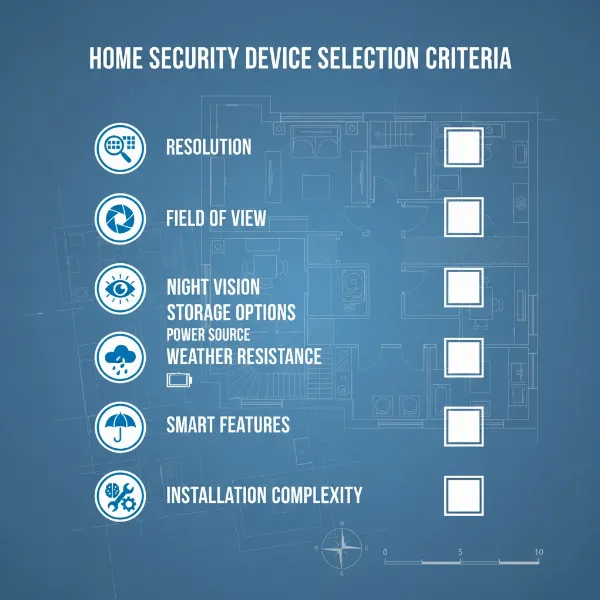
Securing your home entrance is no longer a luxury but a fundamental necessity in today’s world. With a growing concern for property safety and package theft, an outdoor camera for your home entrance acts as a vigilant guardian, providing crucial eyes and ears where you need them most. These advanced devices offer peace of mind, allowing you to monitor activity, deter potential intruders, and even communicate with visitors from anywhere. This comprehensive guide will navigate you through the world of outdoor cameras, helping you select and install the perfect solution to fortify your home’s most critical entry points.
Outdoor Cameras: Essential Home Security Solutions
Outdoor cameras are indispensable tools for safeguarding your property and loved ones. They serve as a primary deterrent to criminal activity, with studies indicating that up to 90% of homeowners believe cameras actively prevent crime. Beyond deterrence, these cameras provide vital surveillance, capturing evidence of suspicious activity and enabling remote monitoring. Whether you’re at work, on vacation, or simply in another room, a robust outdoor camera system keeps you connected to your home’s exterior, offering timely alerts and the ability to respond to events as they unfold.
Popular Types of Outdoor Entrance Cameras
The market offers a diverse range of outdoor cameras, each designed with specific functionalities and applications in mind. Understanding these types will help you narrow down the best fit for your home entrance.
By Technology and Connectivity
- Wired Cameras: These cameras offer a stable, continuous power supply and reliable data transmission via cables (e.g., Ethernet or power adapters). They are known for their uninterrupted performance and often higher video quality, making them ideal for permanent installations where reliability is paramount.
- Wireless Cameras: Connecting to your home Wi-Fi network, wireless cameras offer flexibility in placement and easier installation, as they don’t require extensive cabling. Many are battery-powered, offering true wire-free placement, while some utilize solar panels for continuous charging.
- IP Cameras (Internet Protocol): Most modern outdoor cameras are IP-based, transmitting digital video over a network. This allows for advanced features and remote access.
- Analog Cameras: While less common for new home installations, older analog cameras transmit video over coaxial cables and are typically part of a DVR system.
|
Our Picks for the Best Outdoor camera in 2026
As an Amazon Associate I earn from qualifying purchases.
|
||
| Num | Product | Action |
|---|---|---|
| 1 | GMK Security Cameras Wireless Outdoor 4 Pack, 2K Battery Powered Cameras for Home Security, Color Night Vision, Motion Detection, 2-Way Talk, IP65 Waterproof, Remote Access, Cloud/SD Storage |

|
| 2 | eufy Security 3K Dual Camera, SoloCam S340, Solar Security Cameras Wireless Outdoor, Cameras for Home Security, 360°Coverage, Pan & Tilt, No Blind Spots, No Monthly Fee, HomeBase S380 Compatible |
|
| 3 | Ring Outdoor Cam Plus, Battery (newest model), Home or business security, Wide-Angle 2K Video with Ring Vision, Low-Light Sight for full-color night vision, Mount-Anywhere Versatility, Black |
|
| 4 | Security Cameras Wireless Outdoor 355° Pan Rotating 2K Color Night Vision Cameras for Home Security WiFi Battery Outdoor Camera Motion Detection 2-Way Talk IP65 Spotlight Siren SD/Cloud Storage 2 Pack |
|
| 5 | 2026 Upgraded 2K Security Cameras Wireless Outdoor, Free Cloud Storage, 1-6 Months Battery Life, Waterproof, 2-Way Talk, AI Motion Detection Spotlight Siren Alarm Cameras for Home Security |
|
| 6 | All-new Blink Video Doorbell + Outdoor 4 – Wireless smart security cameras, head-to-toe HD view, two-year battery life. Sync Module Core included – 2 camera system + Video Doorbell |
|
| 7 | WYZE Cam v4 (Latest Model), 2.5K AI Security Camera, Indoor/Outdoor Cameras for Home Security, Baby Monitor & Pet Camera, Vibrant Color Night Vision, No Subscription Required, Free Expert Help |
|
| 8 | Blink Outdoor 4 – Wireless smart security camera, two-year battery life, 1080p HD day and infrared night live view, two-way talk. Sync Module Core included – 3 camera system |
|
| 9 | aosu Security Cameras Outdoor Wireless, 4 Cam-Kit, No Subscription Required, Solar-Powered, Home Security Cameras System with 360° Pan & Tilt, Auto Tracking, 2K Color Night Vision, Easy Setup |
|
| 10 | Ring Outdoor Cam (Stick Up Cam), Weather-resistant home or business security camera, outdoor ready, Live View, Color Night Vision, Two-Way Talk, motion alerts, Works with Alexa, White |
|
By Features and Form Factor
- Video Doorbells: These devices integrate a camera with a traditional doorbell, allowing you to see, hear, and speak with visitors remotely via a smartphone app. They are excellent for monitoring package deliveries and identifying individuals at your front door.
- Bullet Cameras: Characterized by their cylindrical shape, bullet cameras are often used for longer-range viewing and are visibly deterring. They typically feature a fixed focus and are highly weather-resistant.
- Dome Cameras: Designed for discreetness and vandal resistance, dome cameras have a spherical shape encased in a clear dome. They often offer wide-angle views, making them suitable for entryways or areas where a less obtrusive camera is desired.
- PTZ (Pan-Tilt-Zoom) Cameras: These cameras provide dynamic control, allowing you to remotely pan (move horizontally), tilt (move vertically), and zoom in or out. They are excellent for monitoring large spaces where flexible coverage is needed.
- Spotlight Cameras: Equipped with built-in LED spotlights, these cameras illuminate dark areas when motion is detected, enhancing color night vision and actively deterring intruders.
- Floodlight Cameras: Similar to spotlight cameras but with more powerful floodlights, these offer superior illumination for larger areas and often include sirens for active deterrence.
- Solar Cameras: These cameras integrate a solar panel to recharge their built-in battery, providing an eco-friendly and low-maintenance power solution, especially useful in locations without easy access to electrical outlets.
“The right camera type depends entirely on your specific needs, whether it’s discreet monitoring, wide-area coverage, or active deterrence at your entrance.”
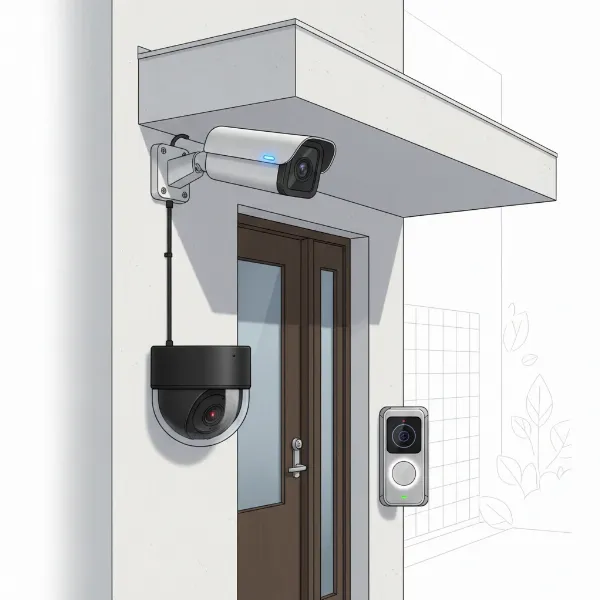 Various types of outdoor cameras including bullet, dome, and video doorbell, illustrating diversity for home security needs.
Comparing Popular Outdoor Cameras for Home Entrances
Choosing the best outdoor camera for your home entrance involves evaluating several critical features. Here’s a comparison of key specifications found in popular models:
| Feature | Ideal for Front Entrances | Explanation |
|---|---|---|
| Resolution | 2K (1440p) or 4K (2160p) | Higher resolution ensures clearer images and videos, crucial for identifying faces, license plates, or small details, especially across wider or inconsistently lit entrances. While 1080p is a minimum, 2K is preferred, and 4K offers exceptional clarity. |
| Field of View | 130° or wider, or PTZ capabilities | A wide field of view captures the entire doorstep, walkway, and potentially parts of the street, minimizing blind spots. PTZ cameras offer flexibility for monitoring larger zones. |
| Night Vision | Color Night Vision or Infrared (IR) with good range (100ft+) | Clear night vision is essential for 24/7 surveillance. Infrared provides black-and-white footage in darkness, while color night vision, often enhanced by spotlights, offers more detailed and vivid nighttime images. Starlight technology also enables color night vision in low light. |
| Weatherproofing | IP65, IP66, or IP67 | An Ingress Protection (IP) rating indicates resistance to dust and water. IP65 protects against dust and low-pressure water jets, suitable for moderate weather. IP66/IP67 ratings are ideal for harsh climates, resisting high-pressure water jets or temporary submersion, ensuring year-round operation. |
| Smart Features | AI motion detection, person/package/vehicle differentiation | Advanced AI can distinguish between people, packages, vehicles, and animals, significantly reducing false alarms from wind, rain, or passing cars. This ensures you receive relevant alerts. Two-way audio allows real-time communication. |
| Power Source | Battery, Solar, or Wired (PoE) | Battery-powered cameras offer easy installation but require recharging. Solar-powered options provide continuous charge. Wired cameras (especially Power over Ethernet – PoE) deliver stable, uninterrupted power and data, ideal for reliable setups. |
| Storage | Local (SD card, NVR) and/or Cloud | Local storage options (like microSD cards or Network Video Recorders) avoid monthly fees and keep data private. Cloud storage offers remote access and easy scalability but typically incurs subscription costs. Many cameras offer both. |
| Connectivity | 2.4GHz Wi-Fi (for range), 5GHz Wi-Fi (for speed), LTE | 2.4GHz Wi-Fi is better for cameras further from your router due to its greater range, while 5GHz offers faster speeds for closer connections. LTE cameras are suitable for locations without Wi-Fi. |
| Price Range | Varies from $50 (budget) to $250+ (high-end) | Prices depend heavily on features, resolution, and brand. Budget cameras offer essentials, while mid-range and high-end models provide more advanced functionalities and durability. Subscription fees for cloud storage can also add to the overall cost. |
Key Criteria for Choosing an Outdoor Camera
Selecting the best outdoor camera for your home entrance requires careful consideration of your specific needs, budget, and property characteristics.
1. Resolution
The clarity of your camera’s footage is paramount. For optimal detail at your entrance, look for cameras offering at least 2K (1440p) resolution. While 1080p (Full HD) is a common baseline, 4K Ultra HD cameras provide exceptional sharpness, making it easier to identify individuals and discern crucial details like license plates.
2. Field of View
The camera’s field of view determines how much area it can cover. For home entrances, a wide-angle lens (130° or more) is highly recommended to capture the entire doorway, porch, and immediate surroundings, minimizing blind spots. If you have a larger area to monitor, consider PTZ (Pan-Tilt-Zoom) cameras for dynamic, comprehensive coverage.
3. Weather Resistance
Outdoor cameras must withstand the elements. Check for an IP (Ingress Protection) rating of IP65 or higher. An IP65 rating protects against dust and moderate water jets, while IP66 and IP67 ratings ensure greater resistance to heavy rain, snow, and even temporary submersion. Also, verify the camera’s operating temperature range to ensure it can perform in your local climate extremes.
4. Night Vision
Since many incidents occur after dark, robust night vision is critical. Look for cameras with infrared (IR) night vision for clear black-and-white footage, or ideally, color night vision, which provides more detail and a better understanding of the scene in low-light conditions. Some cameras use built-in spotlights to enhance color night vision.
5. Smart Features
Modern outdoor cameras offer intelligent features that enhance security and convenience:
- AI Motion Detection: Distinguishes between people, vehicles, and animals, reducing false alarms.
- Activity Zones: Allows you to define specific areas for motion detection, focusing alerts on critical zones.
- Two-Way Audio: Enables you to speak to visitors or deter intruders directly through the camera.
- Smart Home Integration: Compatibility with platforms like Amazon Alexa or Google Assistant allows for voice control and integration into broader smart home routines.
6. Storage Options
Consider how you want your footage stored:
- Local Storage: MicroSD card slots or Network Video Recorders (NVRs) allow you to store footage directly on-site, often without monthly fees. This provides greater privacy control.
- Cloud Storage: Offers remote access to recordings from anywhere and easy scalability, though it typically involves a monthly subscription.
7. Power Source
Choose a power option that suits your installation flexibility and access to power:
- Wired: Provides continuous power and reliable connectivity but may require professional installation.
- Battery-Powered: Offers maximum installation flexibility but requires periodic recharging or battery replacement.
- Solar-Powered: Combines battery power with a solar panel for continuous charging, ideal for remote locations.
- LTE/Cellular: For areas without Wi-Fi, LTE cameras use a cellular data plan.
Top Outdoor Cameras for Every Home Entrance Now
Based on performance, features, and user feedback, here are some of the best outdoor cameras ideal for securing your home entrance:
-
Ring Spotlight Cam Pro:
- Pros: Built-in spotlight and siren, advanced radar and PIR motion detection, customizable motion zones, 1080p HDR video with color night vision, dual-band Wi-Fi.
- Cons: Full functionality requires a Ring Protect subscription.
- Ideal for: Active deterrence and integrated Alexa ecosystems.
-
Eufy Floodlight Camera E340:
- Pros: Bright (up to 2,000 lumens) and adjustable floodlights, high-resolution dual cameras (3K and 2K), 360° horizontal coverage, AI human detection, no monthly fees for local storage.
- Cons: Requires wired installation.
- Ideal for: Comprehensive floodlighting and wide-area surveillance without subscriptions.
-
Eufy SoloCam S230:
- Pros: Entirely solar-powered (2 hours direct sunlight daily), wire-free installation, IP67 weatherproof, 2K resolution, local storage, no monthly fees.
- Cons: Requires good sunlight exposure; limited smart home integrations.
- Ideal for: Eco-friendly, wire-free setups in sunny locations.
-
Lorex 4K Spotlight Outdoor Wi-Fi 6:
- Pros: Exceptional 4K Ultra HD video quality, color night vision, Wi-Fi 6 support for stable streaming, built-in spotlight and siren, no subscription fees.
- Cons: Requires wired installation, potentially complex setup.
- Ideal for: Users prioritizing the highest video resolution and reliable connectivity.
-
Google Nest Cam (Battery):
- Pros: Seamless integration with Google Home, intelligent AI alerts (person detection, activity zones, familiar face recognition), 1080p HDR video, two-way audio.
- Cons: Limited local storage, no color night vision without a Nest Aware subscription.
- Ideal for: Users heavily invested in the Google smart home ecosystem.
-
Wyze Battery Cam Pro:
- Pros: Highly affordable with 2.5K HDR video, color night vision, integrated spotlight and siren, radar and PIR motion detection, dual-band Wi-Fi.
- Cons: Some features require an optional Cam Plus subscription.
- Ideal for: Budget-conscious consumers seeking a feature-rich wireless option.
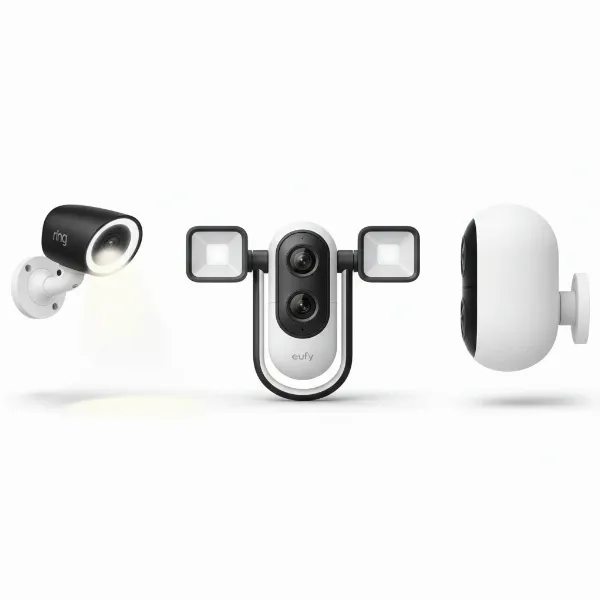 A collage showcasing top outdoor camera models from leading brands like Ring, Eufy, and Nest, highlighting their design and key features.
Installing Your Outdoor Camera for Optimal Security
Proper installation is as crucial as choosing the right camera. A well-placed camera not only provides better coverage but also deters tampering.
1. Choose the Right Location
- Entry Points First: Prioritize covering all entry points, including the front door, back door, garage doors, and first-floor windows.
- Optimal Height: Mount cameras approximately 8 to 10 feet (2.4 to 3 meters) above the ground. This height is sufficient to capture fine details and faces while keeping the camera out of easy reach for tampering or theft.
- Angle Downward: Angle the camera downwards, between 15 to 30 degrees, to optimize motion detection and capture a comprehensive view of people approaching. Avoid pointing cameras directly at the sun to prevent glare and overexposure.
- Consider Shelter: While outdoor cameras are weatherproof, placing them under eaves or an overhang can provide additional protection from direct rain, snow, and harsh sunlight, helping to keep the lens clear.
- Wi-Fi and Power Access: For wireless cameras, ensure the chosen spot has a strong Wi-Fi signal. For wired cameras, plan cable runs to accessible power outlets, ideally indoors, as power adapters are often not weatherproof.
2. Prepare Tools and Materials
Gather necessary tools like a drill, screwdriver, ladder, silicone sealant, and the camera’s mounting hardware. For wired installations, you might need masonry bits, fish tape for running cables, and weatherproof junction boxes.
3. Step-by-Step Installation (General Guide)
- Test Before Mounting: Before drilling, temporarily position the camera and test the live video feed and Wi-Fi signal to confirm optimal placement.
- Mount the Bracket: Securely attach the camera’s mounting bracket to the chosen surface using the provided screws. If drilling through masonry, use appropriate drill bits and anchors.
- Connect Power:
- Wired: Route the power cable (and Ethernet for PoE) from the camera to its power source, often through a small, upward-angled hole drilled through the wall, which should then be sealed with silicone sealant. Connect to the power adapter indoors.
- Battery/Solar: Insert charged batteries or ensure the solar panel is positioned for maximum sunlight exposure.
- Attach the Camera: Secure the camera to its bracket, adjusting the angle for the desired field of view.
- Configure and Test: Download the camera’s mobile app, connect it to your home network, and follow the in-app instructions for setup. Test motion detection, two-way audio, and video quality to ensure everything is functioning correctly.
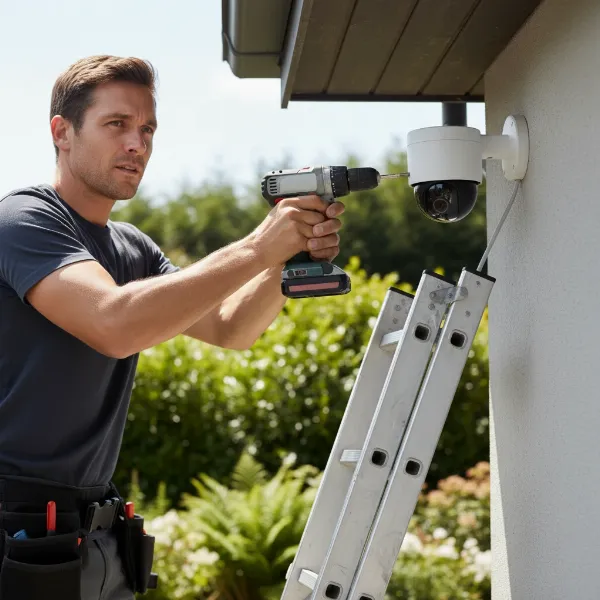 A person installing an outdoor security camera near a home entrance, demonstrating proper height and tools.
Tips for Using and Maintaining Your Outdoor Camera
To maximize the lifespan and effectiveness of your outdoor camera system, regular care and smart usage are essential.
- Regular Cleaning: Periodically clean the camera lens and housing to remove dust, dirt, cobwebs, or water spots. A clear lens ensures optimal image quality.
- Check Connections: Regularly inspect wired connections for corrosion or damage, and ensure wireless cameras maintain a strong Wi-Fi signal. Consider a Wi-Fi extender if signals are weak in certain areas.
- Update Firmware: Keep your camera’s software (firmware) updated. Manufacturers often release updates that improve security, add new features, and enhance performance.
- Battery Management: For battery-powered cameras, monitor battery levels and recharge or replace batteries as needed to avoid downtime. Solar-powered cameras still benefit from occasional checks.
- Review Settings: Periodically review your camera’s settings, especially motion detection zones and alert sensitivity, to ensure they align with your current needs and minimize false alarms.
- Protect from Physical Impact: While many cameras are durable, avoid placing them where they could be easily struck by falling branches, sports equipment, or other physical hazards.
Buying Guide: What to Know Before You Buy an Outdoor Camera
Before making your final decision, consider these key aspects to ensure your outdoor camera perfectly aligns with your home security goals.
- Budget: Determine your overall budget, considering both the initial camera cost and any potential ongoing subscription fees for cloud storage or advanced features. Remember that higher resolution and more advanced smart features often come with a higher price tag.
- Specific Needs: What exactly do you need to monitor? Package deliveries, visitors, deterring intruders, or just general perimeter surveillance? Your primary concern will dictate the type and features of the camera you should prioritize.
- Installation Preference: Do you prefer a DIY-friendly wireless setup, or are you comfortable with a more permanent wired installation, possibly involving professional help? This will influence your choice of power source and connectivity.
- Smart Home Ecosystem: If you already use a smart home platform (like Alexa or Google Home), choose a camera that seamlessly integrates with it for enhanced control and automation.
- Brand Reputation and Warranty: Opt for reputable brands known for reliable products and good customer support. Check the warranty period and return policies.
- Privacy: If privacy is a major concern, prioritize cameras with local storage options to keep your footage on-site and away from the cloud.
Conclusion
Equipping your home entrance with a reliable outdoor camera is a proactive step towards enhanced security and peace of mind. From deterring potential threats to capturing crucial evidence and facilitating seamless communication, these devices are invaluable additions to any modern home. By carefully considering factors like resolution, night vision, weather resistance, smart features, and installation methods, you can confidently select the best outdoor camera to stand guard at your home’s most vital entry points. Invest wisely, and let your outdoor camera be the watchful eye that keeps your home safe and secure around the clock.
Are you ready to transform your home’s security with the perfect outdoor camera solution?
Frequently Asked Questions
What is the ideal height to mount an outdoor security camera?
Mounting an outdoor security camera between 8 to 10 feet (2.4 to 3 meters) high is generally recommended. This height provides a broad field of view for effective surveillance while keeping the camera out of easy reach for tampering, ensuring both optimal coverage and security.
Can outdoor security cameras work without Wi-Fi?
Yes, some outdoor security cameras can operate without Wi-Fi. These often use cellular (LTE) connectivity, requiring a separate data plan, or they might store footage locally on an SD card without remote access features. However, most smart features and remote viewing capabilities rely on a stable Wi-Fi connection.
Do I need to pay monthly fees for outdoor security cameras?
Not necessarily. Many outdoor cameras offer local storage options, such as microSD card slots or compatibility with NVRs, allowing you to store footage without recurring monthly fees. However, cloud storage, advanced AI features, and extended video history often come with optional subscription plans.
How do I protect my outdoor camera from extreme weather?
To protect your outdoor camera from extreme weather, choose models with high IP (Ingress Protection) ratings like IP66 or IP67, indicating strong resistance to dust and water. Additionally, strategically placing the camera under eaves or an overhang can provide extra shelter from direct harsh elements like heavy rain or snow.