Securing your home or business has become more crucial than ever, and outdoor cameras stand as the frontline defense against potential threats. However, navigating the vast landscape of available options can feel overwhelming, often leading to decisions riddled with errors and regrets. This comprehensive guide is designed to cut through the confusion, offering clear insights into selecting the perfect outdoor camera system that meets your specific security needs, ensuring peace of mind without common pitfalls. By understanding key features, types, and installation best practices, you can confidently choose an outdoor camera solution that truly protects what matters most.
Essential Security: The Role of Outdoor Cameras
Outdoor cameras are not just gadgets; they are an indispensable component of any modern security strategy, playing a pivotal role in safeguarding your property and loved ones. Their visible presence acts as a powerful deterrent, often preventing incidents before they even occur. Studies have shown the tangible impact of visible camera installations, with retail theft, for instance, decreasing significantly. Beyond simply recording events, these cameras offer constant vigilance, providing invaluable evidence, and the ultimate reassurance that your perimeter is protected 24/7. They empower you with the ability to monitor your surroundings, providing peace of mind whether you’re at home or away.
Popular Types of Outdoor Cameras
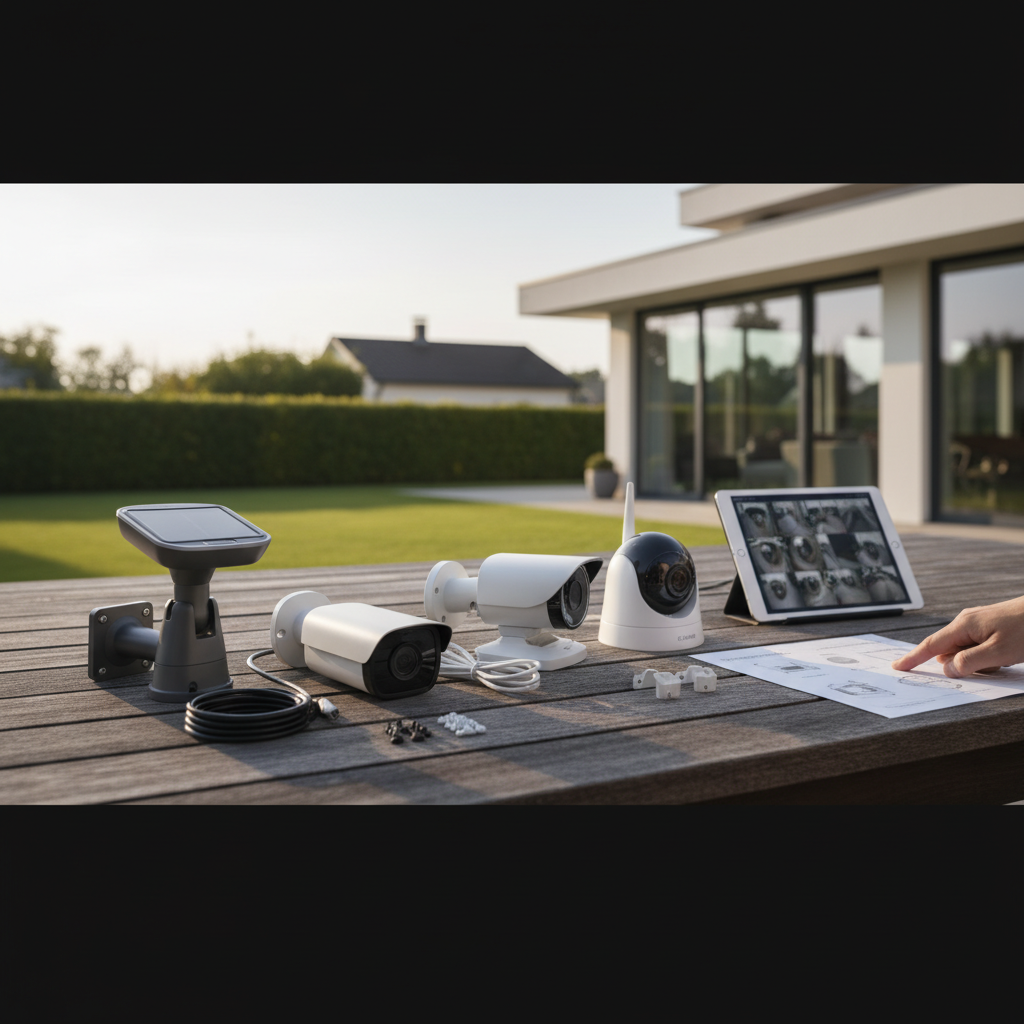
The world of outdoor cameras offers a variety of technologies and designs, each suited for different security demands. Understanding these types is the first step in making an informed choice.
By Technology:
- Wired Cameras: These cameras offer unparalleled reliability through a direct power supply and a stable, interference-free network connection, often via Ethernet cables. While their installation can be more complex and their placement limited by power access, they guarantee consistent operation without concerns about battery life or Wi-Fi signal drops.
- Wireless Cameras (Wi-Fi/Battery): Providing immense flexibility, wireless cameras are easier to install as they don’t require extensive cabling. Battery-powered models offer the most versatile placement options, but necessitate regular battery checks or recharging. Wi-Fi models rely on a strong network signal for optimal performance.
- IP Cameras (Internet Protocol): These digital cameras utilize internet or local network connections, delivering high-resolution video and enabling remote access. Many IP cameras support Power over Ethernet (PoE), allowing both power and data transmission through a single Ethernet cable, simplifying installation while maintaining reliability.
By Features:
- Infrared (IR) Night Vision: Standard for nighttime surveillance, IR LEDs emit invisible light to capture clear black-and-white footage in complete darkness.
- Color Night Vision: Advanced models use low-light sensors and sometimes integrated spotlights to produce full-color images even in very dim conditions, offering more detailed visual information than traditional IR.
- Zoom Capabilities: Cameras may offer optical zoom (which magnifies without losing image quality) or digital zoom (which crops and enlarges a portion of the image, potentially reducing clarity).
- PTZ (Pan-Tilt-Zoom) Cameras: These cameras can be remotely controlled to pan horizontally, tilt vertically, and zoom in or out, providing a wide, 360-degree viewing area without needing multiple fixed cameras. They are excellent for monitoring live events but require an operator for real-time adjustments.
- Two-Way Audio: Equipped with microphones and speakers, this feature allows you to listen in on the camera’s surroundings and communicate with visitors or deter intruders directly through the camera.
- Smart Features: Modern cameras integrate Artificial Intelligence (AI) for intelligent detection of people, vehicles, animals, or packages, significantly reducing false alerts from benign movements. Customizable activity zones allow you to define specific areas for monitoring, further refining alerts.
By Form Factor:
- Bullet Cameras: Characterized by their cylindrical shape, these cameras are highly visible and often serve as a strong deterrent. They are typically good for long-range viewing and are relatively easy to install, often including robust night vision capabilities.
- Dome Cameras: Designed with a discreet, often vandal-resistant dome housing, these cameras blend more seamlessly into their environment. Their housing protects the camera lens from tampering and harsh weather.
- Turret Cameras: Similar to dome cameras but without the protective plastic dome, turret cameras offer a flexible ball-and-socket design for easy angle adjustment. They avoid the glare issues sometimes associated with dome covers and often provide superior IR illumination.
Outdoor Camera Comparison Chart
Choosing the right outdoor camera involves weighing various factors against your specific needs. The table below compares common types based on crucial criteria.
| Feature / Camera Type | Wired IP (PoE) | Wireless (Battery/Solar) | PTZ Camera | Bullet Camera | Dome Camera |
|---|---|---|---|---|---|
| Resolution | 1080p to 4K+ | 1080p to 4K | 1080p to 4K | 1080p to 4K+ | 1080p to 4K+ |
| Night Vision Type | IR / Color | IR / Color | IR / Color | IR / Color | IR / Color |
| Weather Resistance | IP66/IP67 recommended | IP65/IP66 recommended | IP65/IP66 recommended | IP66/IP67 recommended | IP66/IP67 recommended |
| Field of View | Fixed, wide | Fixed, wide | Variable (360° pan/tilt) | Fixed, often narrow for range | Fixed, wide (varifocal options) |
| Power Source | PoE / DC Power | Battery / Solar / DC Power | PoE / DC Power | PoE / DC Power | PoE / DC Power |
| Smart Features | Advanced AI, detection | AI, basic detection | AI, tracking, detection | AI, detection | AI, detection |
| Installation | Complex (cabling) | Simple (flexible placement) | Moderate (cabling/power) | Simple to moderate | Moderate (secure mounting) |
| Cost | Moderate to High | Low to Moderate | High | Low to Moderate | Low to Moderate |
Key Criteria for Selecting an Outdoor Camera
Making the right choice for an outdoor camera system means carefully evaluating several important factors that directly impact performance and longevity.
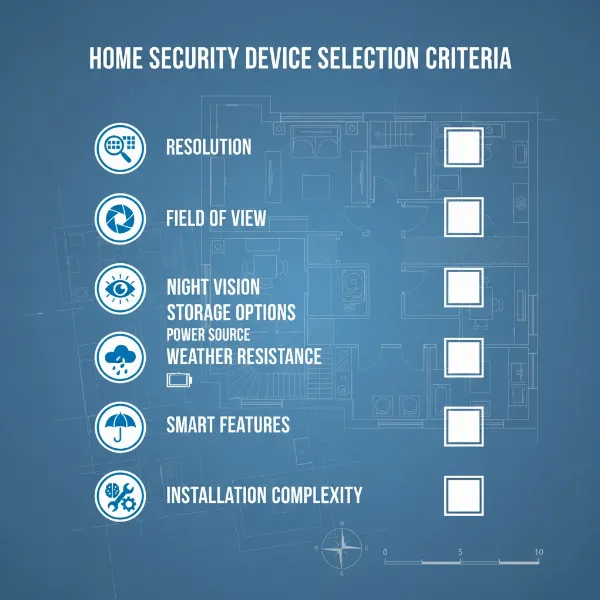
- Resolution: The clarity of your footage is paramount. While 1080p HD offers good quality, 2K and 4K resolutions provide significantly sharper images, making it easier to identify faces or license plates. However, higher resolutions demand more network bandwidth and storage, so ensure your infrastructure can support it without lag.
- Field of View (FoV): This determines how much area the camera can see. A wide-angle lens (typically ≥100°) covers more ground, reducing the number of cameras needed to eliminate blind spots. Conversely, a narrower angle provides more detail for specific areas. Balance coverage with the level of detail required for your surveillance zones.
- Weather Resistance (IP Rating): Your outdoor camera must withstand the elements. The Ingress Protection (IP) rating indicates its resistance to dust and water. For most outdoor applications, an IP65 rating (dust-tight, protected against strong water jets) is a good starting point. For harsher climates with heavy rain, snow, or even potential submersion, IP66 or IP67 ratings offer superior protection. Look for cameras made from durable materials like metal or heavy-duty plastic.
- Night Vision: Most crimes occur under the cloak of darkness, making robust night vision crucial. Infrared (IR) LEDs provide clear black-and-white footage, with longer ranges covering more distance. For more detailed and identifiable images, color night vision, often achieved with built-in spotlights, is highly advantageous. Ensure the night vision range is sufficient for your target area, typically ranging from 30 to 100 feet.
- Smart Features: Modern cameras go beyond simple recording. AI-powered detection for people, vehicles, or even animals can drastically reduce false alarms triggered by swaying branches or passing shadows. Features like customizable activity zones allow you to focus monitoring on critical areas, while facial recognition offers an advanced layer of security.
- Storage: Decide whether you prefer local storage (microSD cards, Network Video Recorders/Digital Video Recorders) or cloud storage. Local storage offers ownership of footage without subscription fees, while cloud storage provides off-site backup and easy remote access, often requiring a monthly subscription. Plan your storage retention needs (e.g., 30, 60, or 90 days) from the outset.
- Power Source: Options include wired (most reliable, constant power), battery-operated (flexible placement, but requires recharging), and solar-powered (eco-friendly, but dependent on sunlight availability). Power over Ethernet (PoE) offers a wired solution that combines power and data in one cable, simplifying installation.
- Temperature Tolerance: Outdoor cameras must function reliably across varying temperatures. Most good cameras operate from -4°F to 122°F, but professional-grade models can handle extremes from -22°F up to 140°F. Always verify the operating temperature range for your specific climate.
- Interoperability: If you plan to expand your security system in the future, consider cameras that support open standards like ONVIF (Open Network Video Interface Forum). This ensures cross-vendor compatibility and flexibility with different Video Management Systems (VMS).
Top Outdoor Cameras on the Market Today
The market for outdoor security cameras is robust, featuring numerous models with cutting-edge technology. Here are some highly-regarded brands and their standout offerings, providing a glimpse into the best options available:
- Arlo: Renowned for its wireless capabilities, Arlo cameras offer up to 4K resolution, advanced AI detection, and impressive battery life. Many models also support local storage options, making them versatile for various setups.
- Google Nest Cam (Outdoor or Indoor, Battery): This versatile camera can be used both indoors and outdoors, offering 1080p resolution and a host of free smart features including intelligent alerts and a 3-hour video history. Its battery-powered design allows for easy installation, and it integrates seamlessly with Google Assistant and Alexa.
- Ring: With a broad portfolio, Ring provides numerous outdoor camera solutions, including battery, solar, plug-in, and Power over Ethernet (PoE) options. Many models feature motion-activated lighting, sirens, two-way audio, and excellent integration with the Alexa ecosystem, with some even offering 4K resolution.
- SimpliSafe Outdoor Camera: This camera provides 1080p HD video, a wide 140-degree field of view, an integrated spotlight, and a siren. A standout feature is its Active Guard Outdoor Protection, which allows professional monitoring agents to actively deter threats through the camera’s features, though this requires a premium monitoring plan.
- Eufy S340: This model is recognized for its solar-powered design, significantly extending battery life. It boasts 3K resolution and a 360-degree pan and tilt functionality, offering extensive coverage with minimal power intervention.
- Blink Outdoor 4: A popular budget-friendly wireless option, the Blink Outdoor 4 delivers clear video quality during the day and night. It offers customizable motion zones, allowing users to fine-tune detection areas and minimize irrelevant alerts.
Outdoor Camera Installation Guide
Proper installation is as crucial as choosing the right outdoor camera. A well-planned and executed installation ensures optimal performance, reliability, and coverage.
- Planning and Site Assessment: Start by walking around your property to identify all crucial zones, entry points, vulnerable areas, and potential blind spots. Assess existing lighting and network connectivity. For wired systems, map out potential cable routes to ensure efficient and concealed connections. Consider height, angles, and environmental factors like direct sunlight which can cause glare.
- Gather Tools and Equipment: Before you begin, ensure you have all necessary tools: a drill, various screws and mounting hardware, cable tools (if wired), and essential weatherproofing components like weatherproof junction boxes and silicone sealant.
- Positioning and Mounting: Cameras should ideally be mounted at a height of 8-10 feet to deter tampering and provide a broad field of view. Aim for a downward angle of 15-30 degrees for optimal coverage. Avoid positioning cameras directly facing strong light sources or areas with constant glare. Securely attach the camera using appropriate brackets and ensure weather-tight sealing for outdoor installations to prevent moisture ingress. Use tamper-proof screws for added security.
- Wiring and Power (for wired cameras): If using wired cameras, carefully run cables through walls or ceilings to hide them from view and protect them from damage. Utilize conduit for added protection in exposed areas. Test Ethernet cables with a cable tester before sealing them. Connect to your power source (DC adapter or PoE switch) and network. For non-PoE setups, use weatherproof power adapters or enclosures.
- Connectivity (for wireless cameras): For wireless cameras, ensure they are placed within a strong Wi-Fi signal range to avoid connectivity issues and dropped footage. You may need Wi-Fi extenders for larger properties.
- Configuration and Testing: Once physically installed, power on your system. Use the camera’s accompanying app or NVR interface to check the live feed. Adjust camera angles, configure night vision settings, motion detection zones, and any smart features. Perform a walk-through to ensure all critical areas are covered and motion detection is functioning correctly without excessive false alarms.
Tips for Outdoor Camera Usage and Maintenance
To ensure your outdoor camera system operates effectively for years to come, regular usage and maintenance are key. Neglecting these steps can lead to decreased performance or even system failure.
- Routine Cleaning: Outdoor cameras are exposed to dust, dirt, spiderwebs, and precipitation. Regularly clean the camera lenses and housing with a soft, damp cloth to prevent obstructions and maintain clear video quality. More frequent cleaning may be necessary in dusty or high-traffic areas.
- Check Electrical Connections and Power Supply: Periodically inspect all electrical connections, especially in outdoor installations, for signs of corrosion or wear. Test cable integrity and use a multimeter to ensure cameras receive stable power within manufacturer specifications. Verify that backup power systems, if present, are functioning correctly.
- Update Firmware Regularly: Manufacturers frequently release firmware updates to enhance security, improve performance, and add new features. Regularly check for and install these updates to keep your system current and protected against vulnerabilities.
- Manage Storage Effectively: Whether using local or cloud storage, regularly review and manage your footage. Ensure that your storage solution has sufficient capacity and that older, unnecessary recordings are cleared out according to your retention policy.
- Protect from Physical Impacts: While outdoor cameras are built to be robust, ensure they are protected from potential physical damage, such as falling debris or impacts from severe weather. Adjust mounting if necessary to prevent exposure to extreme conditions beyond their IP rating.
- Review Footage Post-Installation: Even after initial setup, periodically review recorded footage to confirm that camera angles remain optimal, there are no new obstructions, and detection features are still accurately capturing events without excessive false alarms. This proactive step helps maintain effective surveillance.
Outdoor Camera Buying Guide: What to Know Before You Buy
Before making a final decision on your outdoor camera purchase, consider these essential points to ensure you invest in a system that truly meets your expectations and provides reliable security.
- Budget Assessment: Determine your realistic budget. Outdoor cameras range from entry-level, budget-friendly options to high-end, professional-grade systems with extensive features. Knowing your budget will help narrow down choices and manage expectations regarding features and quality.
- Define Specific Security Needs: What precisely do you need the camera for? Is it general perimeter monitoring, identifying specific individuals, monitoring package deliveries, or deterring trespassers? Your specific needs will dictate the required resolution, field of view, night vision capabilities, and smart features.
- Feature Checklist: Create a checklist of essential features based on your needs. This might include 2K/4K resolution, color night vision, a specific IP rating (e.g., IP66), AI human/vehicle detection, two-way audio, and preferred storage options (local vs. cloud).
- Research Reputable Brands: Stick to well-known brands with positive reviews and a track record of reliable products and customer support. This often translates to better product longevity, consistent firmware updates, and accessible technical assistance.
- Warranty and Support: Understand the manufacturer’s warranty and customer support policies. A robust warranty and readily available support can save you significant hassle and cost down the line if issues arise.
- Awareness of Hidden Costs: Be mindful of potential hidden costs. Many cameras offer advanced features like cloud storage, AI detection, or professional monitoring plans that require monthly or annual subscriptions. Factor these into your overall budget.
Câu Hỏi Thường Gặp
What is the best resolution for an outdoor camera?
|
Our Picks for the Best Outdoor camera in 2026
As an Amazon Associate I earn from qualifying purchases.
|
||
| Num | Product | Action |
|---|---|---|
| 1 | 2026 Upgraded 2K Security Cameras Wireless Outdoor, Free Cloud Storage, 1-6 Months Battery Life, Waterproof, 2-Way Talk, AI Motion Detection Spotlight Siren Alarm Cameras for Home Security |

|
| 2 | WYZE Cam v4 (Latest Model), 2.5K AI Security Camera, Indoor/Outdoor Cameras for Home Security, Baby Monitor & Pet Camera, Vibrant Color Night Vision, No Subscription Required, Free Expert Help |
|
| 3 | GMK Security Cameras Wireless Outdoor 4 Pack, 2K Battery Powered Cameras for Home Security, Color Night Vision, Motion Detection, 2-Way Talk, IP65 Waterproof, Remote Access, Cloud/SD Storage |
|
| 4 | Security Cameras Wireless Outdoor 355° Pan Rotating 2K Color Night Vision Cameras for Home Security WiFi Battery Outdoor Camera Motion Detection 2-Way Talk IP65 Spotlight Siren SD/Cloud Storage 2 Pack |
|
| 5 | All-new Blink Video Doorbell + Outdoor 4 – Wireless smart security cameras, head-to-toe HD view, two-year battery life. Sync Module Core included – 2 camera system + Video Doorbell |
|
| 6 | Ring Outdoor Cam Plus, Battery (newest model), Home or business security, Wide-Angle 2K Video with Ring Vision, Low-Light Sight for full-color night vision, Mount-Anywhere Versatility, Black |
|
| 7 | eufy Security 3K Dual Camera, SoloCam S340, Solar Security Cameras Wireless Outdoor, Cameras for Home Security, 360°Coverage, Pan & Tilt, No Blind Spots, No Monthly Fee, HomeBase S380 Compatible |
|
| 8 | Ring Outdoor Cam (Stick Up Cam), Weather-resistant home or business security camera, outdoor ready, Live View, Color Night Vision, Two-Way Talk, motion alerts, Works with Alexa, White |
|
| 9 | aosu Security Cameras Outdoor Wireless, 4 Cam-Kit, No Subscription Required, Solar-Powered, Home Security Cameras System with 360° Pan & Tilt, Auto Tracking, 2K Color Night Vision, Easy Setup |
|
| 10 | Blink Outdoor 4 – Wireless smart security camera, two-year battery life, 1080p HD day and infrared night live view, two-way talk. Sync Module Core included – 3 camera system |
|
For an outdoor camera, 1080p HD is a widely accepted standard that provides clear images without excessive data usage. However, for superior detail to identify faces or license plates, 2K or 4K resolution is recommended, provided your network and storage can support the larger file sizes and bandwidth demands.
How important is the IP rating for outdoor cameras?
The IP (Ingress Protection) rating is critically important for outdoor cameras as it specifies their resistance to dust and water. For reliable outdoor performance, an IP65 rating is generally sufficient, protecting against strong jets of water. For harsher weather conditions, an IP66 or IP67 rating offers enhanced durability against powerful water and even temporary submersion.
Can outdoor cameras work in extreme temperatures?
Yes, most outdoor cameras are designed to operate across a range of temperatures. Standard commercial cameras typically function from approximately -4°F to 122°F. However, for regions experiencing more extreme cold or heat, professional-grade models are available that can withstand temperatures from as low as -22°F to as high as 140°F.
Do I need a subscription for outdoor security camera features?
Many outdoor security cameras offer basic functionalities like live viewing and motion alerts without a subscription. However, advanced features such as cloud video storage, AI-powered object detection (people, vehicles), and professional monitoring services often require a paid monthly or annual subscription. Always check the features included with the camera versus those requiring a plan.
What is the ideal mounting height for an outdoor camera?
The ideal mounting height for an outdoor camera is typically between 8 to 10 feet. This height offers a broad field of view, makes the camera less susceptible to tampering, and provides a clear vantage point while still allowing for detailed capture of events. It is also advised to angle the camera downwards by about 15-30 degrees for optimal coverage.