Are you considering enhancing your home or business security but wondering if an outdoor camera system is truly a worthwhile investment? In an age where security concerns are increasingly prominent, deploying robust surveillance can offer invaluable peace of mind. This comprehensive guide will explore everything you need to know about outdoor cameras, from their types and essential features to installation and maintenance, helping you determine the perfect solution for your specific needs.
Outdoor Cameras: An Essential Security Solution
Outdoor security cameras are no longer just an optional gadget; they are an indispensable component of any modern security strategy, safeguarding both your property and loved ones. Their primary function extends beyond mere recording, acting as a proactive deterrent to potential criminal activity. Visible surveillance systems can significantly reduce the threat of theft and vandalism, often causing would-be intruders to reconsider their actions.
Beyond deterrence, outdoor cameras serve a critical role in gathering evidence. In the unfortunate event of a break-in or incident, recorded footage can be extremely beneficial for insurance claims and legal proceedings, providing clear visual proof. Furthermore, modern outdoor cameras offer remote monitoring capabilities, allowing you to check on your property from anywhere using a smartphone or computer. This constant connection provides unparalleled peace of mind, whether you’re at work or on vacation. Some insurance providers even offer reduced premiums for properties equipped with effective security systems, adding a financial benefit to your safety investment.
Popular Types of Outdoor Cameras
The world of outdoor cameras is diverse, with various types designed to meet different security demands and environments. Understanding these distinctions is crucial for selecting the right system.
By Technology
- Wired Cameras: These systems use physical cables (Ethernet or coaxial) for both power and data transmission. They offer stable connections, consistent power, and crisp video quality, making them highly reliable. However, installation can be more complex due to the need for cable routing.
- Wireless Cameras: Connecting via Wi-Fi, wireless cameras offer simpler installation and greater flexibility in placement. They are ideal where running cables is impractical, but they rely on a strong Wi-Fi signal and may have battery life considerations.
- IP (Internet Protocol) Cameras: IP cameras transmit video over an internet connection, providing high-resolution footage and remote monitoring capabilities. They process data internally before sending it to storage systems.
- Analog Cameras: Traditional analog cameras transmit video through coaxial cables without requiring internet access. While generally more affordable, their resolution is often lower than IP cameras.
|
Our Picks for the Best Outdoor camera in 2026
As an Amazon Associate I earn from qualifying purchases.
|
||
| Num | Product | Action |
|---|---|---|
| 1 | eufy Security 3K Dual Camera, SoloCam S340, Solar Security Cameras Wireless Outdoor, Cameras for Home Security, 360°Coverage, Pan & Tilt, No Blind Spots, No Monthly Fee, HomeBase S380 Compatible |

|
| 2 | WYZE Cam v4 (Latest Model), 2.5K AI Security Camera, Indoor/Outdoor Cameras for Home Security, Baby Monitor & Pet Camera, Vibrant Color Night Vision, No Subscription Required, Free Expert Help |
|
| 3 | Ring Outdoor Cam Plus, Battery (newest model), Home or business security, Wide-Angle 2K Video with Ring Vision, Low-Light Sight for full-color night vision, Mount-Anywhere Versatility, Black |
|
| 4 | GMK Security Cameras Wireless Outdoor 4 Pack, 2K Battery Powered Cameras for Home Security, Color Night Vision, Motion Detection, 2-Way Talk, IP65 Waterproof, Remote Access, Cloud/SD Storage |
|
| 5 | aosu Security Cameras Outdoor Wireless, 4 Cam-Kit, No Subscription Required, Solar-Powered, Home Security Cameras System with 360° Pan & Tilt, Auto Tracking, 2K Color Night Vision, Easy Setup |
|
| 6 | Security Cameras Wireless Outdoor 355° Pan Rotating 2K Color Night Vision Cameras for Home Security WiFi Battery Outdoor Camera Motion Detection 2-Way Talk IP65 Spotlight Siren SD/Cloud Storage 2 Pack |
|
| 7 | All-new Blink Video Doorbell + Outdoor 4 – Wireless smart security cameras, head-to-toe HD view, two-year battery life. Sync Module Core included – 2 camera system + Video Doorbell |
|
| 8 | Ring Outdoor Cam (Stick Up Cam), Weather-resistant home or business security camera, outdoor ready, Live View, Color Night Vision, Two-Way Talk, motion alerts, Works with Alexa, White |
|
| 9 | 2026 Upgraded 2K Security Cameras Wireless Outdoor, Free Cloud Storage, 1-6 Months Battery Life, Waterproof, 2-Way Talk, AI Motion Detection Spotlight Siren Alarm Cameras for Home Security |
|
| 10 | Blink Outdoor 4 – Wireless smart security camera, two-year battery life, 1080p HD day and infrared night live view, two-way talk. Sync Module Core included – 3 camera system |
|
By Features
- Infrared (IR) Cameras / Night Vision Cameras: Essential for 24/7 surveillance, these cameras use IR LEDs to capture clear black-and-white footage in complete darkness. Advanced models may offer color night vision using low-light sensors and artificial illumination.
- Zoom Cameras: Allow users to magnify specific areas of the footage for more detail.
- PTZ (Pan-Tilt-Zoom) Cameras: These highly versatile cameras can be remotely controlled to pan horizontally, tilt vertically, and zoom in or out, providing 360-degree coverage of large spaces without requiring multiple cameras. They are best for real-time monitoring by an operator.
- Cameras with Microphones and Speakers (Two-Way Audio): Enable communication with visitors or intruders, acting as a deterrent or for convenience with delivery personnel.
- Day/Night Cameras: Designed to capture images in varying light conditions, automatically switching filters to maintain clarity from bright daylight to low light.
By Form Factor
- Bullet Cameras: Easily recognizable by their long, cylindrical shape, bullet cameras are highly visible and often act as a strong crime deterrent. They are excellent for long-range viewing of large outdoor areas like driveways or building perimeters.
- Dome Cameras: Encased in a clear, dome-shaped enclosure, these cameras are more discreet and vandal-resistant. They offer wide-angle views, suitable for entryways or areas where a subtle appearance is preferred.
- Turret Cameras: Also known as “eyeball” cameras, turret cameras are a hybrid, offering the flexibility of a dome camera’s adjustable lens without the dome enclosure. They can be rotated in multiple directions for optimal coverage and are generally more discreet than bullet cameras.
- Fisheye Cameras: Featuring an ultra-wide-angle lens, fisheye cameras can monitor vast areas and capture panoramic images, potentially reducing the number of cameras needed for large spaces like parking lots.
 Various types of outdoor security cameras including bullet, dome, and PTZ models, showcasing their distinct designs and features.
Comparing Outdoor Camera Types
Choosing the right outdoor camera involves weighing the benefits and drawbacks of each type against your specific security needs. Here’s a comparison to help you differentiate:
| Feature | Wired Camera (Analog/IP) | Wireless Camera (IP) | PTZ Camera | Bullet Camera | Dome Camera |
|---|---|---|---|---|---|
| Connectivity | Stable, physical cables | Wi-Fi (can be prone to interference) | Wired/Wireless | Wired/Wireless | Wired/Wireless |
| Power Supply | Continuous, reliable (PoE possible) | Battery (requires recharging/changing) | Wired/Battery | Wired/Battery | Wired/Battery |
| Installation | More complex (cable routing, drilling) | Simpler, more flexible placement | Moderate to complex | Moderate | Moderate |
| Resolution | Typically HD to 4K | HD to 4K (can vary with signal) | HD to 4K | HD to 4K | HD to 4K |
| Field of View (FOV) | Varies by lens | Varies by lens | 360-degree coverage (operator controlled) | Generally narrower, long-range | Wide-angle, discreet |
| Night Vision | Excellent (IR/Color) | Good (IR/Color, can be affected by power) | Excellent (IR/Color) | Excellent (IR/Color) | Good (IR/Color) |
| Weather Resistance | High (IP65+ recommended) | High (IP65+ recommended) | High (IP65+ recommended) | High (IP65+ recommended) | High (IP65+ recommended, vandal-resistant) |
| Deterrence | High (visible) | Moderate to high | High (visible, moving) | Very High (visible) | Low (discreet) |
| Cost | Moderate to High (installation) | Moderate (potential subscription) | High | Moderate | Moderate |
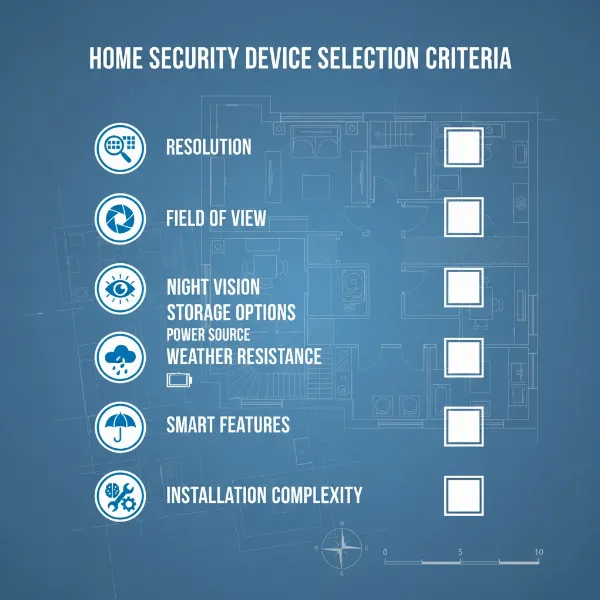
Key Criteria for Choosing an Outdoor Camera
Selecting the ideal outdoor camera involves carefully evaluating several critical features to ensure it meets your specific security requirements and budget.
Resolution
The clarity of video footage is paramount for identification purposes. While 1080p HD is a common standard, offering clear images for most needs, 2K and 4K cameras provide superior detail, making it easier to identify faces, license plates, and other critical elements. Higher resolution often reduces the number of cameras needed to cover a large area effectively.
Field of View (FOV)
This refers to the width of the area a camera can cover. A wider field of view (e.g., 100° to 180°) means fewer cameras may be required to monitor the same space, minimizing blind spots. Conversely, a narrower angle might offer more detail for specific, distant targets. Balancing coverage and detail is key.
Weather Resistance
Since outdoor cameras are exposed to the elements, durability is essential. Look for the Ingress Protection (IP) rating, which indicates how well the camera is protected against dust and water. An IP65 rating or higher is generally recommended for outdoor use, safeguarding against dust and strong water jets. For areas with severe weather, IP66 or IP67 ratings offer enhanced protection, even against temporary submersion. The camera’s material quality (metal or heavy-duty plastic) and its operating temperature range are also crucial considerations.
Night Vision
Most criminal activity occurs under the cover of darkness, making robust night vision capabilities vital.
- Infrared (IR) LEDs enable cameras to see in total darkness, producing clear black-and-white footage. The range and quality of IR LEDs directly impact night vision effectiveness.
- Color Night Vision is an advanced feature that uses low-light sensors or artificial illumination (like built-in spotlights) to provide full-color images even at night, offering more detail than traditional IR.
Ensure the night vision range is sufficient for the area you need to monitor, typically ranging from 30 to 100 feet.
Smart Features
Modern outdoor cameras incorporate intelligent features to enhance surveillance and reduce false alarms:
- Motion Detection: Triggers recording and alerts only when movement is detected, saving storage space and focusing on relevant events.
- Human/Vehicle Detection (AI Analytics): Advanced cameras can differentiate between people, vehicles, and other objects (like animals or swaying branches), significantly reducing false positives.
- Activity Zones: Allows you to define specific areas within the camera’s field of view for monitoring, ignoring irrelevant regions.
Storage
The method of storing video footage is crucial for reviewing and sharing important events:
- Local Storage: Uses SD cards or Network Video Recorders (NVRs)/Digital Video Recorders (DVRs). Offers privacy and avoids subscription fees but may have limited capacity or be vulnerable to theft if on-site.
- Cloud Storage: Provides secure, remote access to footage, often requiring a subscription. It offers larger storage capacity and off-site redundancy.
- Hybrid Storage: Combines local and cloud storage for the best of both worlds, ensuring redundancy and reliability. Consider retention policies (e.g., 30, 60, or 90 days) based on your needs.
Power Source
Outdoor cameras can be powered in several ways:
- Wired: Offers a reliable, constant power supply but requires professional installation and limits placement options.
- Wireless (Battery-powered): Easier to install and flexible in placement, but batteries may need regular recharging or replacement, especially with high activity.
- Solar-Powered: Eco-friendly and cost-effective, providing power in remote locations without wiring. However, effectiveness depends on adequate sunlight exposure.
Top 5 Best Outdoor Cameras Today
The market is flooded with excellent outdoor camera options, each offering a unique blend of features and price points. Based on current trends and expert reviews, here are some of the top contenders that stand out for their performance and value.
-
Eufy SoloCam S340:
- Pros: This camera often receives high marks for its integrated solar panel, providing continuous power and eliminating the need for frequent battery changes. It boasts 3K resolution, 360-degree pan and tilt, and dual-camera views for enhanced coverage. Its AI features focus on human and vehicle detection, reducing false alarms. It also offers local storage options.
- Cons: Some users might find its reliance on solar power less ideal in consistently cloudy environments, and advanced features may require an optional subscription for full functionality.
-
Nest Cam (battery):
- Pros: Known for its ease of installation thanks to a magnetic base and weatherproof design. It offers 1080p resolution with sharp images day and night, two-way audio, and intelligent alerts for people, vehicles, and animals. It also provides a few hours of free rolling video storage.
- Cons: Full feature access, like familiar face detection and extended video history, typically requires a Nest Aware subscription, which adds to the overall cost.
-
Blink Outdoor 4:
- Pros: An excellent budget-friendly, truly wireless option, running on AA batteries that can last up to two years. It’s compact, easy to install, and integrates well with Amazon Alexa. It offers improved night vision and a wider field of view compared to previous generations.
- Cons: Video resolution is 1080p, which might be less detailed than 2K or 4K options. Advanced features and video history often require a subscription plan.
-
Arlo Pro 5S 2K:
- Pros: A high-end option offering sharp 2K HDR video, fast alerts, and dual-band Wi-Fi for reliable connectivity. It provides color night vision, a wide 160-degree field of view, and two-way audio. The Arlo ecosystem is known for its robust features and user-friendly app.
- Cons: This is a more premium device, and many of its advanced features and cloud storage require an ongoing Arlo Secure subscription.
-
Botslab W510 4K AI Security Camera System:
- Pros: Offers 4K (8MP) ultra-clear video quality, providing exceptional detail. It includes smart AI detection to differentiate between people, cars, and animals, minimizing false alarms. The W510 often features solar power options for wire-free setup and local storage without monthly fees.
- Cons: As a brand-specific system, its integration with other smart home ecosystems might be more limited compared to broader platforms.
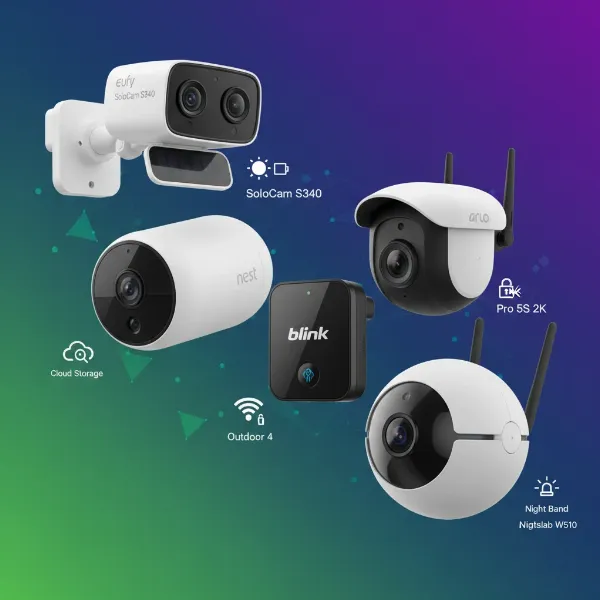 A collage showcasing various top-rated outdoor security cameras from different brands, highlighting their unique features and designs.
Outdoor Camera Installation Guide
Proper installation is key to maximizing your outdoor camera’s effectiveness and longevity. Whether you choose a wired or wireless system, careful planning and execution will ensure optimal performance.
-
Choose Optimal Locations:
- Walk around your property to identify critical zones such as main entrances, driveways, gates, garages, and side yards.
- Position cameras at least 8-10 feet off the ground to deter tampering and vandalism.
- Ensure a clear line of sight to target areas, avoiding obstructions like trees or bushes that could trigger false alarms.
- Avoid direct sunlight to prevent glare and image degradation.
- For wireless cameras, ensure the location has strong Wi-Fi signal coverage.
-
Gather Necessary Tools and Equipment:
- For Wired Systems: Ethernet cables (Cat5e or Cat6 with weather-resistant jackets), waterproof RJ45 couplers, mounting hardware (rust-resistant brackets and screws), weatherproof junction boxes, cable clips/conduit, cable tester, sealing materials (rubber grommets, silicone caulk).
- For Wireless Systems: Mounting hardware, drill, ladder.
- General tools: Drill, screwdriver set, ladder, and a level.
-
Mount the Cameras:
- Mark mounting locations based on your planning.
- Install weatherproof junction boxes (for wired systems) to house cable connections and protect them from elements.
- Securely attach the camera mounting brackets to the chosen surface.
- Mount the camera onto the bracket. For optimal motion detection, angle battery-operated cameras at about 30 degrees facing down, especially if detecting side-to-side motion.
-
Connect the Camera to a Power Source:
- Wired Cameras: Route Ethernet cables from your home (often where the NVR/DVR or router is located) to the camera. For PoE cameras, connect the Ethernet cable directly to a PoE switch or NVR. For non-PoE, use weatherproof power adapters near outdoor outlets.
- Wireless Cameras: If battery-powered, ensure batteries are fully charged. For solar-powered cameras, position the solar panel for maximum sun exposure.
-
Configure the Camera System:
- Connect the camera to your Wi-Fi network (for wireless) or directly to your NVR/DVR (for wired).
- Install any required software or mobile apps.
- Configure network settings for secure and fast data transmission.
- Set up motion detection zones to optimize alerts and minimize false alarms.
- Adjust image quality settings to balance resolution and bandwidth consumption.
-
Test and Adjust the Camera Feed:
- Power on the system and check the live feed through your NVR, DVR, or mobile app.
- Adjust camera angles as needed to ensure complete coverage and clear footage.
- Verify night vision, motion detection, and image quality.
- Test Ethernet cables with a cable tester before sealing them in walls or junction boxes.
Tips for Using and Maintaining Outdoor Cameras
To ensure your outdoor cameras provide reliable security for years to come, regular maintenance and smart usage practices are essential.
- Regular Cleaning: Dust, pollen, rain, and spiderwebs can accumulate on camera lenses and housings, blurring images. Periodically clean the lenses with a soft cloth and mild cleaner to maintain clear footage.
- Check Connections and Power: Regularly inspect all wired connections for corrosion or damage, especially after extreme weather. For wireless cameras, monitor battery levels and recharge/replace as needed. If using solar power, ensure the panels remain clean and unobstructed.
- Update Firmware: Camera manufacturers frequently release firmware updates to improve features, patch security vulnerabilities, and enhance performance. Always keep your camera’s software up to date.
- Protect from Physical Damage: While outdoor cameras are built to be robust, consider additional protection against physical impacts or tampering. Ensure mounting hardware remains tight and consider protective casings in high-risk areas.
- Review Footage Periodically: Regularly reviewing recorded footage helps verify that camera angles are still optimal, exposure is correct, and image resolution meets your standards. This also helps you become familiar with typical activity patterns.
- Secure Your Network: If your cameras are connected to Wi-Fi, ensure your network is secure with strong, unique passwords. Enable two-factor authentication (2FA) for camera apps to prevent unauthorized access to your footage.
“A well-maintained outdoor camera system is your silent guardian, offering continuous vigilance and unparalleled peace of mind.” – [Your Name/Role: Admin of reviewmagz.com, Surveillance Technician]
Buying Guide: What to Know Before You Buy an Outdoor Camera
Investing in an outdoor camera system is a significant decision that requires careful consideration. Before making a purchase, ensure you have a clear understanding of your needs and the market offerings.
- Determine Your Budget: Outdoor cameras range widely in price. While it’s tempting to opt for the cheapest option, balancing cost with quality and essential features is crucial for long-term satisfaction. Factor in potential subscription fees for cloud storage or advanced AI features.
- Assess Your Specific Needs:
- What areas need coverage? (e.g., front door, backyard, driveway, specific entry points)
- Do you need 24/7 recording or motion-activated?
- Is clear night vision essential? Color or IR?
- Do you need features like two-way audio or advanced AI detection?
- What are the local weather conditions your camera must withstand?
- What is your comfort level with installation (DIY vs. professional)?
- Prioritize Essential Features: Based on your needs, create a checklist of non-negotiable features (e.g., 4K resolution, IP66 weather rating, human detection). Don’t compromise on these core functionalities.
- Research Reputable Brands: Stick to well-known brands with a track record of reliability, good customer support, and regular software updates. Look at independent reviews and consumer feedback. Some popular brands include Eufy, Nest, Blink, Arlo, Reolink, and Ring.
- Understand Warranty and Support: A longer warranty period often indicates a manufacturer’s confidence in their product. Good customer support is invaluable for troubleshooting or technical assistance down the line.
- Consider System Scalability: Think about your future security needs. Can you easily add more cameras or integrate with other smart home devices if desired? Favor systems that support open standards like ONVIF for better cross-vendor compatibility.
Remember, the best outdoor security camera is one that not only fits your budget but also reliably provides the functionality and peace of mind you need to keep your home or business secure.
Conclusion
The question of whether an outdoor camera is worth it ultimately depends on your individual security needs and priorities. However, with the rising importance of proactive security measures, these devices have proven to be an invaluable asset for crime deterrence, evidence collection, and remote monitoring. By carefully considering the various types, essential features like resolution and weather resistance, and smart installation practices, you can confidently choose a system that offers robust protection. Investing in the right outdoor camera system not only safeguards your property but also provides unparalleled peace of mind in an unpredictable world.
What specific aspect of outdoor camera technology excites you the most for enhancing your personal security?
Câu Hỏi Thường Gặp
What makes a security camera good for outdoor surveillance?
A good outdoor security camera must be weatherproof (IP65+ rated), offer high-resolution video (1080p to 4K), and provide clear night vision. Essential features also include wide field of view, reliable motion detection, and the ability to withstand extreme temperatures to ensure consistent performance in all conditions.
Do I need monthly fees for security surveillance storage?
Not necessarily. Many outdoor cameras offer local storage options via SD cards or NVRs, allowing you to save videos without recurring monthly fees. Cloud storage often comes with subscription costs but provides convenient remote access and off-site redundancy. Hybrid solutions offer both.
Can outdoor security cameras work without the internet?
Yes, some outdoor cameras can work without an internet connection, especially if they rely solely on local storage (like an SD card or a local DVR). However, an internet connection is typically required for remote viewing, cloud storage, and receiving real-time alerts on your smartphone.
How high should I mount my outdoor security camera?
For optimal performance and to deter tampering, it is generally recommended to mount outdoor security cameras at a height of 8 to 10 feet off the ground. This provides a strategic vantage point for comprehensive coverage and better image quality while making it difficult for intruders to reach.
What is the difference between wired and wireless outdoor cameras?
Wired outdoor cameras offer stable, continuous power and data transmission via cables, ensuring reliability. Wireless cameras connect via Wi-Fi for data and are often battery or solar-powered, providing easier installation and greater placement flexibility but requiring a strong signal and battery management.