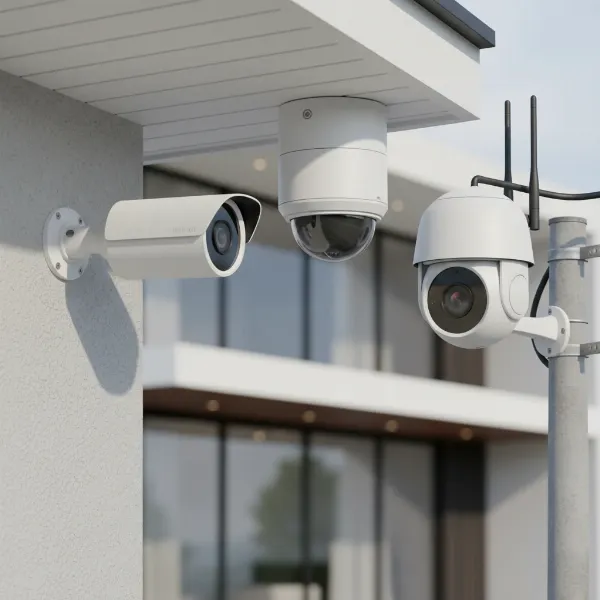
In an age where home security is paramount, the question often arises: “Is an outdoor camera truly worth the investment?” As an Admin of reviewmagz.com and a technician with over 10 years of experience in surveillance, particularly outdoor cameras, I’ve seen firsthand how these devices transform peace of mind into tangible security. They are not just gadgets; they are your property’s vigilant guardians, offering a comprehensive shield against potential threats. This article will delve into the undeniable value of outdoor cameras, exploring their types, essential features, selection criteria, installation nuances, and maintenance tips to help you make the best choice for your home or business.
Outdoor Cameras: An Essential Security Solution
Outdoor security cameras have become an indispensable component of modern home and business security systems. Their primary function extends beyond mere observation; they serve as a powerful deterrent against criminal activity. Research indicates that visible security cameras can make potential intruders up to 300% more likely to bypass your property, effectively moving on to an easier target. This proactive deterrent capability is invaluable, preventing incidents before they even occur.
Beyond deterrence, these cameras provide crucial evidence in the unfortunate event of a crime. Footage of attempted break-ins, vandalism, or suspicious activities can be vital for law enforcement investigations and insurance claims, helping to identify perpetrators and strengthen your case. Furthermore, modern outdoor cameras offer remote monitoring, allowing you to check on your property from anywhere via a smartphone or computer, ensuring constant vigilance whether you’re at work or on vacation. This capability, coupled with the potential for reduced homeowner’s insurance premiums, solidifies the position of outdoor cameras as an essential security solution, offering unparalleled peace of mind.
Common Types of Outdoor Cameras
The world of outdoor cameras offers a variety of technologies and designs, each suited for different security needs and environments. Understanding these categories is the first step toward selecting the right system for your property.
By Technology and Connectivity
- Analog Cameras: These traditional cameras transmit video signals via coaxial cables to a Digital Video Recorder (DVR). They are often cost-effective and straightforward to install, requiring minimal bandwidth. While typically offering lower resolutions (up to 720p HD, though some HD analog can reach 4-5MP), they are reliable and less dependent on network stability. However, their zooming capabilities are limited, and footage quality may be less sharp compared to digital counterparts. [cite: 1, 2, 3, 4, 5 (from third search)]
- IP (Internet Protocol) Cameras: Representing modern surveillance, IP cameras transmit digital video over a network, either via Wi-Fi or Ethernet, to a Network Video Recorder (NVR) or cloud storage. They boast superior resolutions (1080p, 2K, 4K, and higher), offering crisp, detailed footage. IP cameras often come with advanced features like AI-powered motion detection, facial recognition, and two-way audio. While they typically involve a higher initial investment and depend on stable internet for optimal remote performance, their advanced capabilities and scalability make them a popular choice. [cite: 1, 2, 3, 4 (from third search)]
- Wireless Cameras: These cameras offer significant installation flexibility, as they don’t require video cables. Many connect to your home Wi-Fi network. While easier to place, their performance can be affected by Wi-Fi signal strength, and many rely on batteries that need periodic recharging or replacement. [cite: 1 (from second search)]
- Wired (PoE – Power over Ethernet) Cameras: Considered the most reliable option, PoE cameras receive both power and data through a single Ethernet cable. This setup ensures a stable connection and consistent power supply, delivering superior video quality without signal drops. While installation may be more involved due to cable routing, PoE systems are ideal for robust, long-term surveillance solutions. [cite: 1, 2, 5 (from second search)]
|
Our Picks for the Best Outdoor camera in 2026
As an Amazon Associate I earn from qualifying purchases.
|
||
| Num | Product | Action |
|---|---|---|
| 1 | All-new Blink Video Doorbell + Outdoor 4 – Wireless smart security cameras, head-to-toe HD view, two-year battery life. Sync Module Core included – 2 camera system + Video Doorbell |

|
| 2 | 2026 Upgraded 2K Security Cameras Wireless Outdoor, Free Cloud Storage, 1-6 Months Battery Life, Waterproof, 2-Way Talk, AI Motion Detection Spotlight Siren Alarm Cameras for Home Security |
|
| 3 | aosu Security Cameras Outdoor Wireless, 4 Cam-Kit, No Subscription Required, Solar-Powered, Home Security Cameras System with 360° Pan & Tilt, Auto Tracking, 2K Color Night Vision, Easy Setup |
|
| 4 | Blink Outdoor 4 – Wireless smart security camera, two-year battery life, 1080p HD day and infrared night live view, two-way talk. Sync Module Core included – 3 camera system |
|
| 5 | Ring Outdoor Cam Plus, Battery (newest model), Home or business security, Wide-Angle 2K Video with Ring Vision, Low-Light Sight for full-color night vision, Mount-Anywhere Versatility, Black |
|
| 6 | Ring Outdoor Cam (Stick Up Cam), Weather-resistant home or business security camera, outdoor ready, Live View, Color Night Vision, Two-Way Talk, motion alerts, Works with Alexa, White |
|
| 7 | WYZE Cam v4 (Latest Model), 2.5K AI Security Camera, Indoor/Outdoor Cameras for Home Security, Baby Monitor & Pet Camera, Vibrant Color Night Vision, No Subscription Required, Free Expert Help |
|
| 8 | Security Cameras Wireless Outdoor 355° Pan Rotating 2K Color Night Vision Cameras for Home Security WiFi Battery Outdoor Camera Motion Detection 2-Way Talk IP65 Spotlight Siren SD/Cloud Storage 2 Pack |
|
| 9 | eufy Security 3K Dual Camera, SoloCam S340, Solar Security Cameras Wireless Outdoor, Cameras for Home Security, 360°Coverage, Pan & Tilt, No Blind Spots, No Monthly Fee, HomeBase S380 Compatible |
|
| 10 | GMK Security Cameras Wireless Outdoor 4 Pack, 2K Battery Powered Cameras for Home Security, Color Night Vision, Motion Detection, 2-Way Talk, IP65 Waterproof, Remote Access, Cloud/SD Storage |
|
By Design and Features
- Bullet Cameras: Easily recognizable by their cylindrical shape, bullet cameras are highly visible, acting as an effective deterrent. They often feature powerful infrared (IR) night vision, providing long-range visibility up to 300 feet, making them ideal for monitoring driveways and large yards. [cite: 1, 5 (from second search)]
- Dome Cameras: Designed with a discreet, often vandal-resistant dome casing, these cameras are suitable for areas where aesthetics or tamper protection are concerns. They typically offer wider angle views, perfect for entrances or under eaves, with night vision usually extending up to 130 feet. Some variations include 360-degree fisheye lenses. [cite: 1, 5 (from second search)]
- Turret Cameras: Often called “eyeball cameras,” turret cameras blend the features of bullet and dome cameras. They are flexible in positioning, offer good night vision, and are less susceptible to IR reflection issues sometimes seen with domes. [cite: 1 (from second search)]
- PTZ (Pan-Tilt-Zoom) Cameras: These advanced cameras provide remote control over their pan, tilt, and zoom functions, allowing users to cover vast outdoor areas and actively track subjects. They are excellent for real-time monitoring and active deterrence but may require manual adjustment for wide-angle coverage. [cite: 1, 2, 3, 4 (from second search)]
- LPR (License Plate Recognition) Cameras: Specialized cameras designed to capture clear images of vehicle license plates, commonly used for monitoring entry and exit points. [cite: 1 (from second search)]
Outdoor Camera Comparison Table
Choosing the right outdoor camera involves weighing various factors. This table offers a concise comparison across key criteria for common outdoor camera types.
| Feature | Analog Camera | IP Wired (PoE) Camera | IP Wireless (Battery/Solar) Camera |
|---|---|---|---|
| Resolution | Up to 720p HD (some HD analog 4-5MP) | 1080p, 2K, 4K+ | 1080p, 2K, 3K |
| Connectivity | Coaxial cable to DVR | Ethernet (data & power) to NVR/router | Wi-Fi (requires stable signal) |
| Night Vision | Basic IR | Advanced IR, Color Night Vision (with spotlight) | IR, Color Night Vision (with spotlight) |
| Weather Rating | Varies, usually IP66+ | IP66/IP67 recommended | IP66/IP67 recommended |
| Power | 12V DC (separate power cable) | PoE (Power over Ethernet) | Battery (rechargeable), Solar-powered |
| Storage | DVR (local) | NVR (local), Cloud, Hybrid | SD card (local), Cloud, HomeBase (local) |
| Smart Features | Limited | AI (person/vehicle detection, facial recognition) | AI (person/vehicle detection), two-way audio |
| Installation | Simple, requires coaxial cable routing | More complex, requires Ethernet cable routing | Easiest, most flexible placement |
| Reliability | High (local, less network dependent) | Highest (stable connection, constant power) | Variable (depends on Wi-Fi, battery life, sunlight) |
| Cost | Lower initial cost | Moderate to high initial cost | Moderate initial cost (can be higher for advanced) |
Key Factors When Choosing an Outdoor Camera
Selecting the ideal outdoor camera requires careful consideration of several technical and practical aspects to match your specific security needs and environmental conditions.
Resolution
The clarity of your camera’s footage is paramount for identification and evidence. While 1080p HD offers clear details for most scenarios, 2K or 4K ultra-high-definition cameras provide significantly sharper images, which is especially beneficial when you need to zoom in on specific details like faces or license plates. Higher resolution ensures that captured footage remains useful even after digital magnification. [cite: 1, 3 (from third search)]
Field of View
The “field of view” refers to the area the camera can capture. A wider field of view, for instance, 160 degrees, allows a single camera to cover a larger expanse, minimizing blind spots. This is particularly crucial for monitoring large outdoor areas such as yards, driveways, or expansive entry points, reducing the need for multiple cameras. [cite: 4, 5 (from first search)]
Weather Resistance
Outdoor cameras must endure harsh environmental conditions. Look for cameras with an IP (Ingress Protection) rating of IP66 or IP67. An IP66 rating signifies protection against powerful water jets and dust, while IP67 indicates protection against temporary immersion in water and dust. These ratings ensure your camera remains operational through rain, snow, extreme temperatures, and dusty conditions. [cite: 1 (from second search)]
Night Vision
Effective nighttime surveillance is critical. Most outdoor cameras are equipped with infrared (IR) night vision, allowing them to capture clear black-and-white footage in complete darkness. For enhanced detail, consider cameras with color night vision, which use integrated spotlights or advanced low-light sensors to record full-color video even at night. [cite: 1, 4 (from first search), 1 (from second search)]
Smart Features
Modern outdoor cameras come packed with intelligent features that enhance their effectiveness:
- Motion Detection: This feature triggers recording and sends alerts when movement is detected. Look for adjustable sensitivity settings to reduce false alarms from pets or swaying branches.
- AI-Powered Detection: Advanced cameras can differentiate between humans, vehicles, and animals, significantly reducing irrelevant notifications. Some even offer facial recognition to identify known individuals.
- Activity Zones: Define specific areas within the camera’s view to monitor, ignoring activity outside these zones.
- Two-Way Audio: A built-in microphone and speaker allow you to listen in and speak through the camera, enabling communication with visitors or deterring intruders.
- Built-in Siren/Spotlight: These features can actively deter intruders by sounding an alarm or illuminating the area when suspicious activity is detected. [cite: 5 (from first search), 1 (from second search)]
Storage Options
How your footage is stored impacts accessibility and cost:
- Local Storage: Many cameras support microSD cards for onboard storage. NVRs (Network Video Recorders) and DVRs (Digital Video Recorders) offer larger local storage capacities, often without subscription fees. [cite: 1, 4 (from second search)]
- Cloud Storage: This option stores footage remotely on secure servers, providing access from anywhere. Cloud storage typically requires a subscription but offers greater capacity and protection against physical tampering of local devices. [cite: 1, 4 (from second search)]
- Hybrid Storage: Combining local and cloud storage offers the best of both worlds—on-site redundancy and off-site accessibility and backup. [cite: 1, 4 (from second search)]
Power Source
The power source influences installation and ongoing maintenance:
- Wired (AC/PoE): Wired cameras offer constant, reliable power. Power over Ethernet (PoE) is highly efficient, delivering both power and data through a single Ethernet cable, simplifying wiring for larger installations. [cite: 1, 2, 3, 5 (from second search)]
- Battery-Powered: These cameras offer the most flexible placement options as they don’t require nearby power outlets. However, their rechargeable batteries need periodic recharging or replacement. [cite: 1, 2 (from second search)]
- Solar-Powered: Eco-friendly and cost-effective in sunny climates, solar panels continuously recharge the camera’s battery, reducing manual intervention. They are excellent for remote locations where running power cables is impractical. [cite: 1, 2 (from second search)]
“In my experience, prioritizing weather resistance and reliable night vision are non-negotiable for outdoor cameras. Without these, even the highest resolution camera is useless when it matters most.” – Admin, reviewmagz.com
Top Outdoor Cameras on the Market
The outdoor camera market is robust, with several brands offering excellent solutions tailored to different needs. Here are a few notable options and their key attributes:
- Eufy SoloCam S340: This solar-powered camera stands out with its 3K PTZ (Pan-Tilt-Zoom) capabilities and a dual-lens system, providing detailed and wide-ranging surveillance. It offers local storage via an 8GB onboard memory and microSD card slot, eliminating the need for monthly subscription fees. Its 360-degree view ensures comprehensive coverage. [cite: 2, 4 (from second search)]
- Arlo Pro 5S 2K: A top contender for wireless setups, the Arlo Pro 5S 2K delivers sharp 2K HDR video, dual-band Wi-Fi for reliable connectivity, and quick alerts. It features color night vision, a wide 160-degree field of view, and an impressive battery life of up to eight months, making it a high-performance choice for those seeking wire-free solutions. [cite: 3, 5 (from second search)]
- Aqara Camera Hub G5 Pro: This camera offers crisp 2K video and advanced AI-driven motion detection. Its significant advantage lies in its smart home integration, serving as a hub for various platforms including Matter, Thread, and Zigbee, making it a versatile choice for connected homes. It also includes built-in video storage. [cite: 4 (from second search)]
- Ring Cameras (e.g., Spotlight Cam Pro, Floodlight Cam Pro): Ring provides a diverse range of outdoor cameras with various power options, from battery and solar to plug-in and Power over Ethernet. Many models offer up to 4K resolution, color night vision, remote-activated sirens, real-time notifications, and seamless integration with Alexa-enabled devices, making them excellent for active deterrence and smart home ecosystems. [cite: 5 (from first search), 5 (from second search)]
- Blink Outdoor 4: An excellent budget-friendly battery-powered option, the Blink Outdoor 4 is praised for its simple installation and long battery life. It integrates well within Amazon Alexa smart home environments, offering reliable basic surveillance at an accessible price point. [cite: 3 (from second search)]
- Lorex: Known for its robust hardware and technology-focused cameras, Lorex offers models with high resolutions, often up to 4K, and advanced features like facial recognition. Lorex typically focuses on the hardware itself, usually without the added cost of professional monitoring services. [cite: 5 (from first search), 5 (from second search)]
Installing Your Outdoor Camera
Proper installation is crucial for maximizing your outdoor camera’s effectiveness and ensuring its longevity. While specific steps vary by model, here are general guidelines:
- Choose the Right Location: Mount cameras 8-12 feet high to deter tampering and provide a broad view. Avoid placing them in direct sunlight or facing reflective surfaces, which can cause glare. Angle the camera slightly downward to better capture faces and vehicle license plates. Prioritize covering entry points like doors and windows, and consider overlapping views for comprehensive perimeter coverage. [cite: 1 (from second search)]
- Gather Tools: You’ll typically need a drill, screwdriver, ladder, and potentially wire covers or conduit for wired installations.
- Power and Network Connection: For wired cameras, connect to a power source and your network (if not PoE). For PoE cameras, a single Ethernet cable handles both. Wireless cameras require connection to your Wi-Fi network.
- Mount the Camera: Securely attach the camera to a sturdy surface using the provided mounting hardware.
- Configure Settings: Use the camera’s companion app to complete the setup. This includes connecting to Wi-Fi, defining motion detection zones, adjusting sensitivity, and setting up alerts.
- Test and Adjust: Verify the live feed, test motion detection, and check night vision capabilities. Make any necessary adjustments to the camera’s angle to optimize coverage. For wired installations, consider running cables through walls or using durable wire covers to protect them from tampering and environmental damage, enhancing both security and aesthetics. [cite: 2 (from first search)]
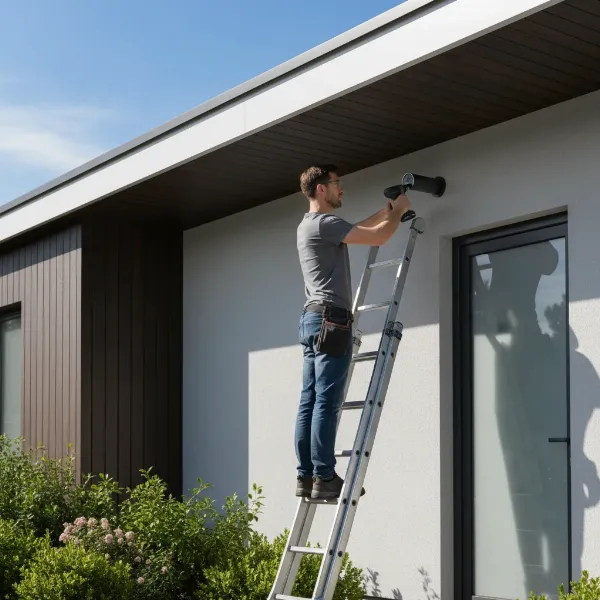 An outdoor security camera being installed on the exterior wall of a modern home, with a person on a ladder making final adjustments. The camera is discreet, and the setting is a sunny day with green foliage.
Tips for Using and Maintaining Outdoor Cameras
To ensure your outdoor camera system remains effective and provides long-lasting security, regular use and maintenance are essential.
- Regular Cleaning: Periodically clean the camera lens and housing to remove dirt, dust, spiderwebs, or water spots that can obscure the view. Use a soft, damp cloth for the lens to avoid scratches.
- Check Connections and Power: For wired cameras, periodically inspect cables and power sources for any damage or loose connections. For battery-powered cameras, monitor battery levels regularly and recharge or replace them as needed. Solar-powered cameras also benefit from occasional checks to ensure the solar panel is clean and receiving adequate sunlight.
- Software Updates: Always keep your camera’s firmware and companion app updated. Manufacturers frequently release updates that include security patches, bug fixes, and new features, enhancing performance and protection against vulnerabilities.
- Physical Protection: While outdoor cameras are designed to be durable, consider adding physical safeguards where practical, such as mounting them under eaves or in slightly recessed areas to offer additional protection from extreme weather or potential vandalism.
- Routine Monitoring: Regularly review footage and respond to alerts promptly. This practice helps you stay familiar with normal activity patterns around your property and quickly identify any suspicious events, ensuring your system is consistently performing its role.
Buying Guide: What to Consider Before You Buy
Before making a purchase, a strategic approach to selecting an outdoor camera can save you time, money, and potential headaches.
- Set a Budget: Determine your financial comfort zone. Remember to account for not only the camera’s upfront cost but also any potential ongoing expenses like cloud storage subscriptions or professional monitoring fees. Advanced features and higher resolutions often come with a higher price tag.
- Identify Your Specific Needs: Clearly define what you want to achieve with your outdoor camera. Are you primarily concerned with deterring crime, capturing evidence, monitoring children, or keeping an eye on deliveries? Do you need 24/7 recording, or are motion-triggered clips sufficient? Your specific use case will dictate the necessary features.
- Assess Weather Conditions: Choose a camera with an appropriate IP weather-resistance rating for your local climate. If you live in an area with heavy rain, snow, or extreme temperatures, prioritize cameras with robust environmental protection (IP66 or IP67).
- Smart Home Integration: If you already have a smart home ecosystem (e.g., Amazon Alexa, Google Home, Apple HomeKit), ensure the camera you choose is compatible. Seamless integration allows for centralized control and automation with other smart devices.
- Research Brand Reputation and Warranty: Opt for reputable brands known for reliability, good customer support, and clear warranty policies. A strong warranty can provide peace of mind in case of defects or issues. Reading user reviews can also offer insights into real-world performance and customer satisfaction.
Conclusion
The question of whether an outdoor camera is worth it can be unequivocally answered with a resounding yes. These devices provide an essential layer of security, acting as powerful deterrents, crucial evidence collectors, and constant eyes on your property, ultimately delivering invaluable peace of mind. With various types, features, and power options available—from robust wired PoE systems to flexible solar-powered units—there’s a solution tailored for almost every need and budget. By carefully considering factors like resolution, weather resistance, smart features, and storage, you can make an informed decision to secure your home or business effectively. Isn’t your peace of mind, and the safety of your loved ones and assets, worth the investment?
Câu Hỏi Thường Gặp
Are outdoor cameras difficult to install?
Installation difficulty varies. Wireless, battery-powered cameras are generally the easiest to install due to their flexibility in placement and lack of wiring. Wired cameras, especially Power over Ethernet (PoE) systems, typically require more effort for cable routing but offer greater reliability.
Do outdoor cameras need Wi-Fi to work?
Not always. While many modern outdoor cameras use Wi-Fi for remote access, live streaming, and instant notifications, some systems (like those with a local NVR/DVR) can record footage locally without an active internet connection. However, remote viewing features will require a stable network connection.
How long do outdoor camera recordings typically last?
The duration of recordings depends on the camera’s storage capacity and your chosen storage solution. Local storage options like SD cards or NVR/DVR hard drives have finite space, while cloud storage plans can offer extended recording histories, often requiring a subscription for longer retention periods.
Can outdoor cameras work in extreme weather conditions?
Yes, many outdoor cameras are specifically designed to withstand extreme weather. Look for models with an IP (Ingress Protection) rating of IP66 or IP67, which indicates high resistance to dust, rain, snow, and temperature fluctuations, ensuring reliable operation in harsh environments.